
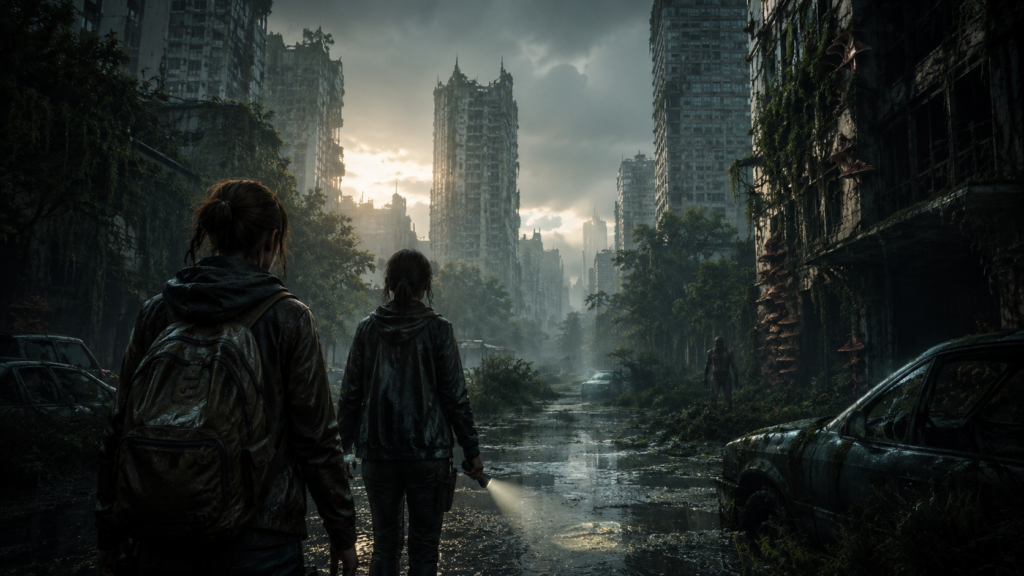
The Last of Us Season 3 is officially happening, production is underway, and HBO expects the series to return in 2027. However, the network has not announced an exact premiere date.
The third season will shift much of the narrative toward Abby, played by Kaitlyn Dever, following the perspective change introduced at the end of Season 2. Bella Ramsey, Isabela Merced, Gabriel Luna and Jeffrey Wright are among the returning cast members reported for the new chapter, while Michelle Mao and Kyriana Kratter have joined as Yara and Lev.
Filming began in British Columbia in March 2026. A temporary production hiatus during June generated cancellation rumors, but reliable reporting identified it as a planned pause rather than a permanent shutdown. Production is expected to continue through 2026 before the anticipated 2027 premiere.
Will There Be a Season 3 of The Last of Us?
Yes, HBO officially renewed the series for a third season.
The network announced the renewal on April 9, 2025, several days before Season 2 premiered. HBO’s official renewal announcement confirmed that the adaptation would continue but did not provide an episode count, filming schedule or release date at the time.
The renewal has not been reversed. Since that original announcement, Season 3 has moved through writing, casting and principal photography.
Therefore, viewers searching “will there be a Season 3 of The Last of Us?” have a definitive answer: the season is not merely being discussed or awaiting approval. It has been ordered and is in production.
The season will continue to air on HBO and stream through HBO Max in supported markets. The first two seasons remain available through HBO’s official The Last of Us page.
The Last of Us Season 3 Release Date
The Last of Us Season 3 is expected in 2027, but an exact premiere date has not been announced. HBO executive Casey Bloys has identified 2027 as the planned release year. A specific month or day should therefore be treated as speculation unless HBO confirms it.
Production began in British Columbia in March 2026. A temporary filming break in June prompted cancellation rumors, but reporting described it as a planned hiatus rather than a permanent shutdown.
The production schedule alone does not establish when the season will premiere. Editing, sound work and visual effects also affect the time between filming and release.
For viewers planning when to watch, the useful distinction is simple: 2027 is the expected release window, while the precise date remains unconfirmed. Check for a dated HBO announcement before relying on unofficial countdowns or release predictions.
The Last of Us Season 3 Cast
The new season combines returning performers with several important additions from the world of The Last of Us Part II.
Confirmed Returning Cast
The returning Season 3 cast includes:
- Kaitlyn Dever as Abby Anderson
- Bella Ramsey as Ellie Williams
- Isabela Merced as Dina
- Gabriel Luna as Tommy Miller
- Jeffrey Wright as Isaac Dixon
- Spencer Lord as Owen
- Tati Gabrielle as Nora
- Ariela Barer as Mel
Some characters who died during Ellie’s side of the Seattle story can still appear because Season 3 is moving backward in the timeline to revisit those days from Abby’s perspective.
Young Mazino may similarly appear as Jesse within the overlapping timeline, although viewers should distinguish such appearances from a reversal of anything that happened in the Season 2 finale.
New and Recast Characters
Variety’s Season 3 casting report confirmed:
- Michelle Mao as Yara
- Kyriana Kratter as Lev
Yara and Lev are Seraphite siblings whose story is closely connected to Abby’s journey.
Additional Season 3 cast announcements include:
- Jorge Lendeborg Jr. as Manny, replacing Danny Ramirez because of a scheduling conflict.
- Clea DuVall as a Seraphite character.
- Jason Ritter as Hanley, a WLF soldier.
- Patrick Wilson as Jerry Anderson, Abby’s father.
- Li Jun Li as Miriam, a Seraphite connected to Yara and Lev.
- Peter Sarsgaard as Amon, an original Seraphite leader created for the television adaptation.
The introduction of Amon is particularly notable because the character does not come directly from the game. His presence suggests that the series will expand the internal structure of the Seraphites rather than treating the group only as distant enemies of the WLF.
No official announcement has confirmed Pedro Pascal’s involvement in Season 3. Joel’s established history allows for flashbacks, but a potential appearance should not be treated as confirmed until HBO or a reliable trade reports it.
Will Abby Have a Bigger Role in Season 3?
Yes. Abby is expected to become the principal perspective character for much of Season 3.
Season 2 largely presented Abby through Ellie’s experience. Viewers saw what she did to Joel and how that act pushed Ellie toward revenge, but they received only limited access to Abby’s life in Seattle.
The finale changes that structure. After the theater confrontation, the story rewinds to “Seattle Day One” and shows Abby at the WLF stadium. That reset indicates that the series will revisit the same three-day period through her eyes.
Neil Druckmann confirmed in 2025 that Season 3 would move toward Abby’s perspective, and Variety reported the planned Abby-focused direction.
Kaitlyn Dever’s expanded role does not necessarily mean Ellie disappears. Bella Ramsey is returning, and the unresolved theater confrontation remains part of the larger narrative. The third season must first provide the missing context surrounding Abby before returning to that moment.
The change is designed to challenge the audience’s original understanding of Abby. The series will ask viewers to see her relationships, loyalties and losses rather than treating her exclusively as the person Ellie wants to kill.
What Will The Last of Us Season 3 Be About?
What has been confirmed
Season 3 will continue adapting The Last of Us Part II and place greater emphasis on Abby’s story.
The final scene of Season 2 establishes the starting point: Abby wakes at the WLF stadium on “Seattle Day One.” The new season is therefore expected to explore what she was doing while Ellie moved through Seattle.
Confirmed casting also points toward several major areas of focus:
- Abby’s relationships with Owen, Mel, Nora and Manny.
- Isaac’s leadership of the Washington Liberation Front.
- The war between the WLF and the Seraphites.
- Abby’s connection with Yara and Lev.
- Jerry Anderson’s influence on Abby.
- The events leading Abby to the theater.
What the game suggests
The game uses Abby’s portion of the story to revisit Seattle from a different perspective. Locations, conflicts and deaths that initially appear to belong only to Ellie’s journey gain new meaning when experienced through Abby.
Season 3 will likely follow that broad structure, but HBO has not issued a complete plot synopsis or episode-by-episode breakdown. It should not be assumed that every mission, location or encounter from the game will appear unchanged.
The television adaptation may also devote more time to Isaac, the WLF and Seraphite leadership. Jeffrey Wright’s Isaac appeared only briefly during Season 2, while the casting of Peter Sarsgaard as an original Seraphite leader suggests that the opposing side will receive additional development.
How Season 2’s Ending Sets Up Season 3
Season 2 ends before revealing the outcome of Abby’s gunshot inside the theater.
Instead of continuing the confrontation, the narrative jumps backward three days. Abby wakes at the WLF stadium, and the “Seattle Day One” title card appears.
That scene does not represent a new event after the theater. It is a chronological reset that prepares the audience to experience Abby’s version of the Seattle story.
For a complete breakdown of the theater confrontation, Jesse’s fate, Ellie and Tommy’s unresolved situations and the timeline reset, read our The Last of Us Season 2 ending explained.
Season 3 must now answer the questions Ellie’s perspective could not:
- Why had Abby separated from several members of her group?
- What was happening inside the WLF?
- How did the Seraphite conflict affect Abby personally?
- What brought Yara and Lev into her life?
- What did Abby experience before discovering the deaths at the aquarium?
- What happens after she reaches the theater?
The narrative delay is intentional. The confrontation cannot be fully understood while Abby remains a stranger to the audience.
What Could Change From The Last of Us Part II?
The HBO series has never treated the games as scripts that must be reproduced scene for scene.
Season 1 expanded Bill and Frank’s story, changed Sam’s characterization and reorganized several encounters. Season 2 altered chronology, expanded Jackson and introduced Gail, an original character played by Catherine O’Hara.
Similar Last of Us Season 3 changes are likely, especially because the adaptation must transform long sections of player-controlled exploration into television drama.
Peter Sarsgaard’s Amon is already a confirmed example. As an original Seraphite leader, he could give the group a defined dramatic viewpoint that the television audience can follow across several episodes.
Patrick Wilson’s casting as Jerry may also allow Season 3 to expand Abby’s memories of her father. That would help explain the emotional foundation of her decisions without relying entirely on exposition.
The timeline could also be rearranged. Season 2 brought some information forward and moved other developments into flashbacks. Season 3 may use the same approach to preserve surprise while making Abby’s storyline work as a television season.
Game Spoiler Warning: The following discussion addresses the game’s general structure but avoids revealing its later outcome.
In The Last of Us Part II, Abby’s three days in Seattle largely parallel Ellie’s. The two characters cross some of the same environments, and their actions affect one another even when they do not meet directly.
Naughty Dog’s explanation of the game’s nonlinear structure describes Ellie and Abby’s motivations as unfolding across intersecting timelines. HBO is preserving that central idea while adapting its presentation for episodic television.
Is The Last of Us Season 3 Cancelled?
No. The Last of Us Season 3 is not cancelled.
The cancellation rumor emerged when production listings showed filming on hiatus during June 2026. Without context, that temporary status was interpreted online as evidence that HBO had stopped making the season.
Reporting later clarified that the pause was planned. A scheduled break is not the same as cancellation, and the production was expected to continue afterward.
The series has:
- An official HBO renewal.
- A 2027 release target.
- Active production.
- Multiple returning cast members.
- Several newly announced characters.
- A developing story under showrunner Craig Mazin.
The phrase “Last of Us Season 3 cancelled” therefore does not describe its current status. HBO has not withdrawn the renewal or announced that production has been terminated.
Who Is Running Season 3?
Craig Mazin remains the showrunner and primary creative leader for Season 3.
Neil Druckmann, who co-created the HBO adaptation and directed the original games, stepped away from active creative involvement in July 2025 to focus on Naughty Dog and its future projects. He remains credited as an executive producer but is no longer serving as the season’s day-to-day creative partner.
Halley Gross, who co-wrote The Last of Us Part II and contributed to Season 2, also stepped away from the active writing team.
These departures do not mean that HBO abandoned the source material. Mazin co-developed the adaptation from the beginning and remains responsible for translating the next section of the game.
However, Druckmann’s reduced role represents a meaningful behind-the-scenes change. It may give Mazin greater control over how Season 3 expands, rearranges or alters the game’s story.
Could There Be More Seasons After Season 3?
HBO has not definitively announced whether Season 3 will be the final season.
Craig Mazin previously argued that the remaining story would be difficult to complete in only one additional season. Earlier planning therefore allowed for the possibility of a fourth season.
More recent comments from HBO executive Casey Bloys have presented two possibilities: one longer third season could complete the adaptation, or the story could continue into a fourth.
No final public decision has been announced.
Viewers should not assume that Season 4 is guaranteed, but they also should not treat Season 3 as officially confirmed to be the end. The answer may depend on the season’s final structure, episode count and how much of Part II the new episodes cover.
HBO has not announced the Season 3 episode count, making it impossible to determine from current information whether the complete remaining story will fit.
What We Know About The Last of Us Season 3 So Far
As of August 12, 2026, the verified status is:
- Renewal: Officially confirmed by HBO.
- Release timing: Expected in 2027.
- Exact release date: Not announced.
- Production: Filming began in British Columbia in March 2026.
- Temporary hiatus: Planned production break, not cancellation.
- Episode count: Not announced.
- Showrunner: Craig Mazin.
- Story focus: Abby’s perspective during the Seattle timeline.
- Returning lead: Kaitlyn Dever as Abby.
- Other returning cast: Bella Ramsey, Isabela Merced, Gabriel Luna and Jeffrey Wright.
- Yara: Michelle Mao.
- Lev: Kyriana Kratter.
- Manny: Jorge Lendeborg Jr., replacing Danny Ramirez.
- Source material: The Last of Us Part II.
- Season 4: Possible, but not officially ordered.
The Last of Us Season 3 — What to Watch Next
The next major update should be an official production-completion announcement or a more specific 2027 release window.
HBO may also reveal the episode count, additional casting and the first footage after filming and early post-production progress far enough. No teaser or full trailer should be expected on a fixed date until the network announces one.
For now, the most important facts are clear: The Last of Us Season 3 is in development, it has not been cancelled, and it is being built around Abby’s side of the Seattle story.
The season’s greatest challenge will not simply be continuing the theater cliffhanger. It will be convincing viewers to reconsider events they already witnessed by revealing everything Ellie—and the audience—failed to see.

