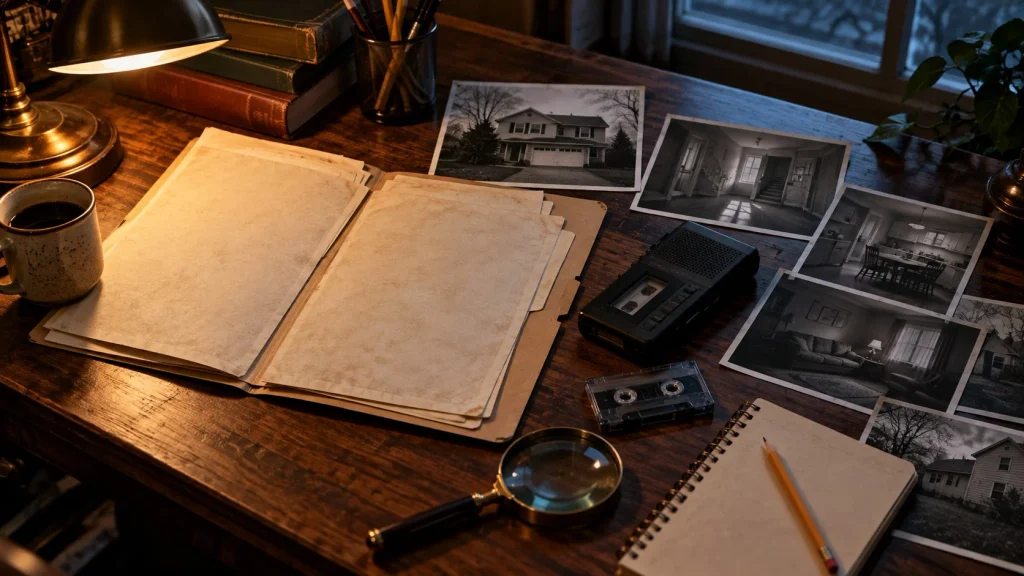
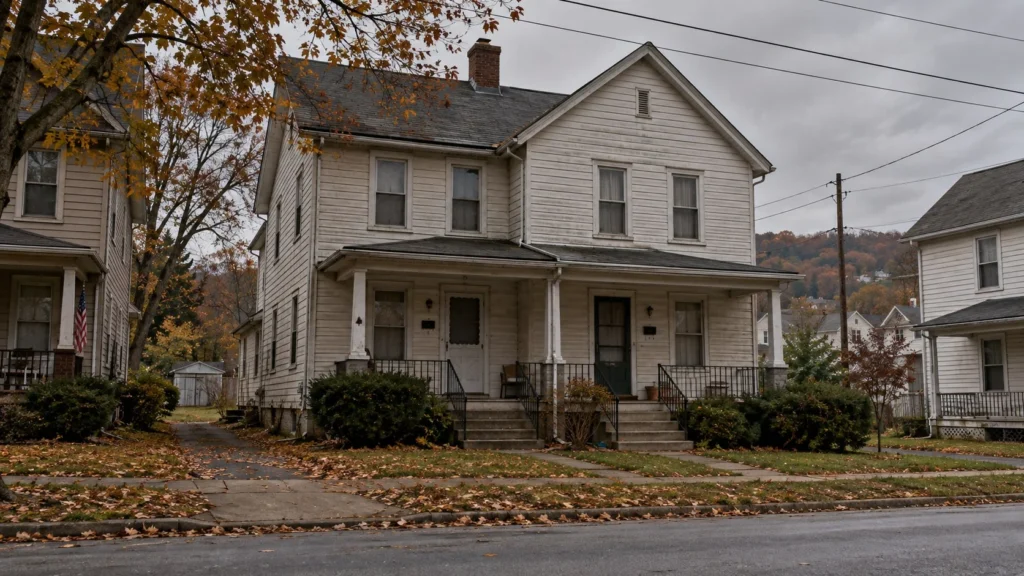
The Conjuring: Last Rites true story begins with a real Pennsylvania family and a disputed haunting, not a verified encounter with demons. Jack and Janet Smurl reported frightening experiences in their West Pittston home, and Ed and Lorraine Warren became involved. The film combines that case with fictional connections designed around the Warren family.
The distinction is crucial: the people, house, and public controversy are historical. The supernatural explanation remains a claim.
Who were the Smurls?
Jack and Janet Smurl lived with their daughters in a duplex in West Pittston, Pennsylvania. Jack’s parents occupied the other side of the property. The family moved into the house in the 1970s, and their account of troubling experiences later developed into allegations of violent paranormal activity.
This was a household drawn into intense public attention. UPI’s August 1986 reporting describes reporters, television crews, and curious visitors converging on the family after its story became public.
That coverage establishes a media event and records what participants said. It does not establish the existence of the entities they described.
What did the family say happened?
The Smurls reported noises, unusual odors, apparitions, and physical attacks attributed to unseen forces. Their account became more alarming as alleged experiences accumulated.
Careful wording is necessary here. “The family reported being attacked” accurately describes testimony. “Demons attacked the family” adopts the supernatural explanation as fact.
Neither dramatic detail nor repeated retelling resolves that difference. The responsible historical question is what evidence accompanies a claim and whether it independently supports the proposed cause.
How did Ed and Lorraine Warren become involved?
The Warrens visited in January 1986 after the family sought help. They supported a paranormal interpretation and described multiple spirits, including a demonic presence.
In Kenny Biddle’s examination for Skeptical Inquirer, he challenges the evidence, compares differing versions of incidents, and discusses obstacles to skeptical investigation. His assessment is explicitly skeptical; it should be read as a critical examination rather than confused with the family’s own account.
The distinction between investigator and independent verifier also matters. The Warrens’ endorsement made the case more famous, but agreement between participants does not automatically provide independent confirmation.
What happened after the story became public?
The family later said the disturbance had subsided and attributed the change to religious intervention. They eventually left the property.
UPI’s January 1988 follow-up reported that the house had been put up for sale in mid-1987 and that the Smurls were living in the Wilkes-Barre area. It also recorded Jack’s assurance that future occupants had nothing to fear.
That contemporary chronology is more useful than treating the movie’s closing account as a historical reference. The same UPI story reported an upcoming March publication for The Haunted, placing the book’s release in 1988 rather than assuming it appeared when the case first made headlines.
What did the movie change?
The mirror came from a different case
This is the clearest correction. In Michael Chaves’s interview about adapting the Smurl case, the director says the mirror was not in the Smurl home. The production combined it with the family’s story and the fictional Warrens’ personal history.
A real object can inspire a fictional plot without verifying the plot. Its existence does not establish that it caused a haunting, pursued Judy, or connected the cases as shown onscreen.
The Warren family becomes the dramatic center
The movie ties the danger to Judy and to her parents’ earlier experiences. That creates a personal conclusion for returning characters, but it should not be used as evidence about what happened inside the actual house.
Consultation does not turn a feature film into a documentary
Chaves also described working with the Smurl sisters during development and production. Consultation is relevant to understanding the adaptation. It is not independent verification of paranormal claims or a guarantee that scenes reproduce historical events.
Fact versus fiction
| Element | What can responsibly be said |
|---|---|
| The Smurl family and Pennsylvania home | Real people and a real property. |
| Public attention in 1986 | Documented by contemporary reporting. |
| Demonic attacks | Allegations made by participants, not established facts. |
| The Warrens’ involvement | Part of the documented case history; their explanation is disputed. |
| The mirror in the Smurl house | A connection created for the movie, according to its director. |
| Judy’s supernatural struggle | Part of the film’s dramatized Warren-family storyline. |
Was this really the Warrens’ last case?
No. NESPR’s own account describes the Warrens’ involvement with Bill Ramsey in 1989, after the Smurl case. The film’s farewell framing concludes this cinematic version of their story; it is not a precise record of their retirement.
More broadly, “based on a true story” does not specify a percentage of accuracy. A film may retain names and a setting while changing causes, chronology, dialogue, and outcomes. Asking which individual elements are supported produces a more useful answer than a blanket yes or no.
Planning to watch the movie? Our The Conjuring: Last Rites streaming guide covers viewing options. If you’ve already seen it, our ending explained article explores the mirror, the Warrens’ fate, and the final scene.