
By CinePulse24 | Reviews | October 14, 2026
Spoiler-light review: This article discusses the movie’s premise, performances, action and themes without revealing its major ending twists.
The verdict: Predator: Badlands is a surprisingly engaging sci-fi adventure that succeeds by doing something risky: asking audiences to root for a Predator rather than fear one. Its inventive alien world, effective central performances and carefully staged action make it worth watching. However, the lighter tone, familiar character arc and reduced horror may disappoint viewers expecting the relentless menace of the original film.
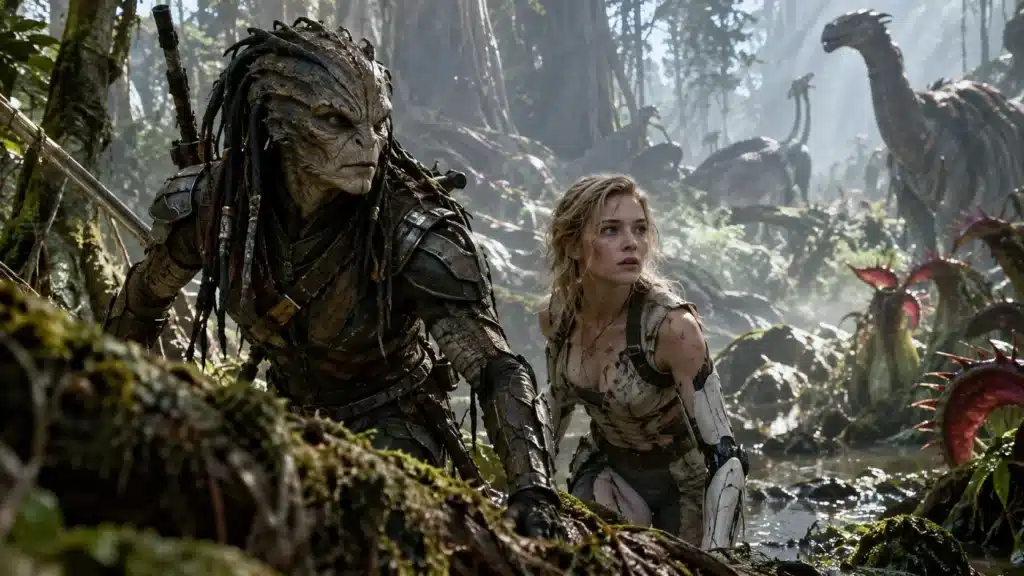
Released on November 7, 2025, Dan Trachtenberg’s 107-minute film follows Dek, a young Yautja hunter rejected by his clan. On a dangerous alien planet, he joins forces with Thia, a damaged synthetic played by Elle Fanning, while pursuing a seemingly impossible target.
Instead of repeating the traditional formula of humans being hunted, the film tells its story from the hunter’s perspective. That choice is its biggest strength — and the main reason some longtime fans may struggle with it.
Predator: Badlands at a Glance
| Detail | Information |
|---|---|
| Movie | Predator: Badlands (2025) |
| Director | Dan Trachtenberg |
| Writer | Patrick Aison |
| Main cast | Dimitrius Schuster-Koloamatangi, Elle Fanning |
| Genre | Science fiction, action, adventure |
| Runtime | 1 hour 47 minutes |
| Rating | PG-13 |
| Theatrical release | November 7, 2025 |
These production details are listed by 20th Century Studios and Rotten Tomatoes.
What Is Predator: Badlands About?
Dek is a young Predator who wants to prove he deserves a place among his people. Viewed as weak by his own clan, he sets out to hunt a creature known as the Kalisk on the hostile planet Genna.
The problem is that Genna is not a conventional hunting ground.
Its animals and plants have evolved into formidable threats, turning even a simple journey across the landscape into a struggle for survival.
Dek soon encounters Thia, a Weyland-Yutani synthetic who becomes his unlikely traveling companion.
Their partnership changes the nature of the movie. Dek begins with a straightforward objective: find the creature, defeat it and return home with proof of his strength.
Thia complicates that plan by forcing him to think, communicate and adapt.
The story gradually becomes less about claiming a trophy and more about understanding what makes someone a capable survivor.
For a more detailed introduction to the characters without searching through multiple cast listings, see our Predator: Badlands cast guide.
What Makes Predator: Badlands Different?
The most significant change is the point of view.
In the original Predator (1987), the alien hunter is terrifying because audiences experience it largely through the people trying to survive its attacks.
Badlands reverses that relationship.
Dek is still dangerous, physically intimidating and equipped with extraordinary weapons, but he also becomes a character whose weaknesses and decisions drive the story.
That shift gives the movie more room for emotional development. Viewers can understand what Dek wants, why he makes mistakes and how his relationship with Thia begins to challenge his assumptions.
It also removes some of the mystery that originally made the Predator frightening.
When an unstoppable monster becomes a vulnerable protagonist, suspense has to come from other sources.
Trachtenberg addresses this by making the planet itself the threat. The result is closer to an alien survival adventure than a conventional stalk-and-kill horror thriller.
Whether that is an improvement depends on what you expect from the franchise.
The Best Part: Dek and Thia’s Chemistry
The relationship between Dek and Thia is the film’s strongest storytelling element.
Dimitrius Schuster-Koloamatangi gives Dek a recognizable personality through physical movement, posture and reactions, despite the challenges of performing beneath an elaborate creature design.
Dek is stubborn, proud and frequently impatient. Those qualities make his gradual openness to cooperation more satisfying.
Elle Fanning provides an effective contrast.
As Thia, she brings humor, curiosity and a conversational energy that Dek lacks. Rather than simply explaining the plot, her character regularly questions his assumptions and encourages him to consider unfamiliar solutions.
Their exchanges help establish a rhythm between intense action sequences.
The partnership also gives the adventure emotional stakes. Without it, Dek’s journey could have become a repetitive sequence of alien encounters.
Fanning’s additional performance as Tessa provides a contrasting personality and a different perspective on Weyland-Yutani’s priorities.
The distinction works because the two synthetics have different attitudes and motivations, not merely different appearances.
The performances are particularly important in a movie with no conventional human protagonist. They make its central relationship accessible even to viewers who know relatively little about Predator mythology.
The Action Is Inventive, but Not Always Terrifying
One of Badlands‘ clearest strengths is the way action sequences use the environment.
Instead of relying entirely on familiar weapons and close-range combat, the film turns Genna’s ecosystem into a collection of dangers, obstacles and potential tools.
Predatory wildlife, aggressive vegetation and unusual environmental hazards make fights feel more varied than a simple contest of strength.
Dek often has to respond to threats that cannot be defeated by charging directly at them.
This gives the action a problem-solving quality. Viewers can follow not only who is winning but also how each encounter changes the characters’ understanding of their surroundings.
The creature designs and large-scale confrontations help establish Genna as more than a generic science-fiction backdrop.
Nevertheless, the PG-13 rating signals a different experience from the harsher entries in the franchise.
The film retains considerable sci-fi violence, but the overall presentation is more adventurous and less focused on horror.
For viewers who appreciate well-constructed action choreography, that approach works.
For those who primarily associate Predator with dread, isolation and brutal pursuit, something may be missing.
Genna Is One of the Movie’s Biggest Strengths
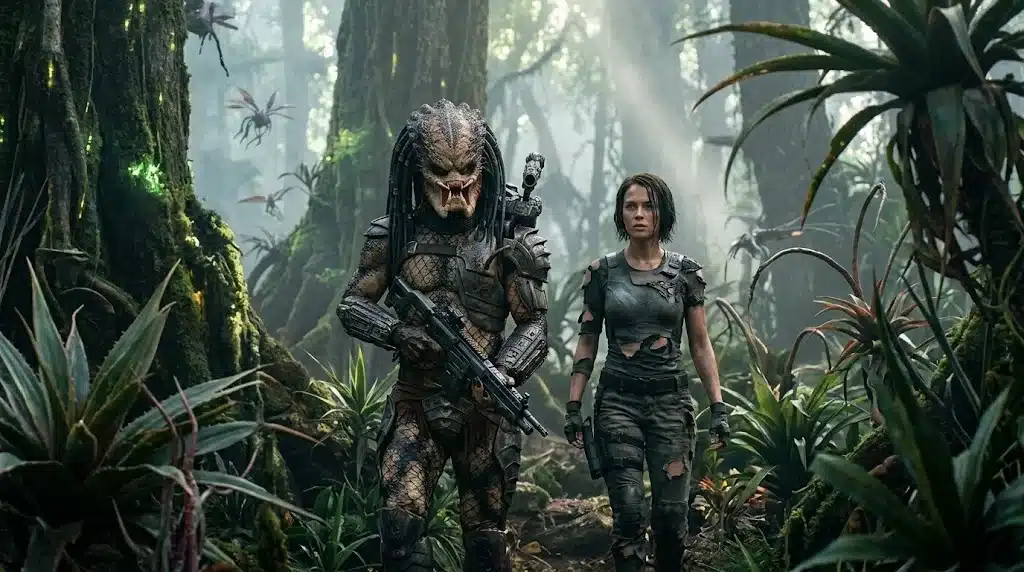
The planet Genna deserves almost as much attention as the central characters.
It is designed as an environment where nearly everything can become dangerous.
The plants and wildlife are not simply decorative monsters waiting for the next action scene. Their behavior helps establish a sense that this world operates according to its own survival rules.
That makes Dek’s journey feel more believable within the movie’s science-fiction premise.
The visuals frequently emphasize how small even a formidable Yautja can appear when surrounded by an unfamiliar ecosystem.
This is an effective way to make the protagonist vulnerable without stripping away his abilities.
It also reinforces the film’s core idea: strength means little if you cannot adapt.
There is a trade-off, however.
The wealth of unusual creatures and hazards sometimes makes the film feel closer to a creature-filled adventure game than to the oppressive survival horror of earlier Predator stories.
The world-building is imaginative, but not every viewer will prefer this more playful direction.
Does the Humor Work?
Mostly, although it depends on your expectations.
Thia’s personality brings much of the film’s lighter dialogue, while the evolving relationship among the travelers creates opportunities for comedy.
These moments prevent the adventure from becoming emotionally monotonous.
They also make Dek’s frustration and gradual transformation easier to understand.
But there is a tonal cost.
The more the film encourages audiences to enjoy its unlikely companions, the further it moves from the franchise’s original atmosphere of sustained fear.
Some jokes and lighter creature interactions interrupt the tension just when a scene might otherwise become genuinely unsettling.
The humor is therefore both a strength and a weakness.
It makes Badlands more approachable, but it changes the kind of movie that Predator has traditionally been.
Where Predator: Badlands Falls Short
1. The Main Character Arc Is Familiar
Dek’s emotional journey is effective, but its basic structure is predictable.
An underestimated outsider leaves home, meets unexpected allies and gradually learns that the values of the group that rejected him are flawed.
The movie handles that idea with confidence, yet experienced viewers will recognize the trajectory early.
Its originality comes more from placing a Predator inside this familiar story than from inventing a new dramatic formula.
2. Some Supporting Characters Need More Depth
Dek and Thia receive most of the attention, leaving parts of the supporting cast defined primarily by their function in the plot.
The film’s corporate antagonism is understandable, but some of its opposing characters lack the complexity that would make their decisions more surprising.
A little more development could have made the conflicts feel less straightforward.
3. The Predator Loses Some of Its Mystery
The decision to make a Yautja the hero opens exciting storytelling possibilities.
It also changes the creature’s identity.
Watching Dek struggle, learn and connect with others inevitably makes the Predator less unknowable.
That is an intentional creative choice rather than a technical flaw, but fans drawn to the alien’s frightening mystique may find the shift difficult to accept.
How Does Predator: Badlands Compare With Prey?
Both films show Trachtenberg’s interest in survival, resourcefulness and characters who must adapt to overcome physically stronger opponents.
However, they approach the Predator concept from opposite directions.
Prey maintains the traditional arrangement of a human protagonist confronting an extraordinary alien hunter. Its historical setting and focused tension create a more grounded survival thriller.
Badlands makes the hunter the protagonist and creates an entire alien environment for him to navigate.
That gives the newer film a broader science-fiction identity and a more openly adventurous tone.
The comparison is useful because one movie is not simply a larger version of the other.
Choose Prey if you want suspense and a focused survival story. Choose Badlands if you prefer alien world-building, unusual character relationships and a more expansive adventure.
What Did Critics Think of Predator: Badlands?
Critical reaction was broadly favorable, although reviewers differed on whether the film’s changes benefited the franchise.
On Metacritic, the film holds a Metascore of 71 based on 43 critic reviews at the time of checking, indicating generally favorable reception.
Matt Zoller Seitz’s review for RogerEbert.com was particularly enthusiastic about the world-building, performances and story construction.
Peter Debruge, writing in Variety, highlighted the unconventional decision to make the alien hunter a sympathetic central character, as well as the film’s violent action and lighter humor.
Other critical responses were less comfortable with the departure from the series’ horror roots.
That division reflects the central question facing the film: does making the Predator more relatable expand the franchise, or remove something essential from it?
Our view is that the experiment works as an adventure, even if it does not fully replace the tension that defined earlier entries.
Is Predator: Badlands Worth Watching?
Yes, particularly if you enjoy sci-fi adventures driven by action, imaginative creatures and developing character relationships.
The film is accessible enough that newcomers can understand Dek’s journey without studying the previous installments.
Longtime fans will find recognizable technology, Yautja culture and the franchise’s familiar interest in hunting and survival.
But expectations matter.
You are more likely to enjoy Badlands if you approach it as a new interpretation of Predator rather than as a direct recreation of the 1987 movie.
Who Will Enjoy It Most?
- Viewers who like fast-moving science-fiction adventures and alien environments.
- Fans of character-driven action stories with unusual partnerships.
- Audiences interested in seeing Yautja society from a Predator’s perspective.
Who Might Be Disappointed?
- Viewers seeking a consistently frightening horror thriller.
- Fans who prefer the Predator to remain mysterious and antagonistic.
- Audiences who dislike humor and emotionally sympathetic creature protagonists in violent action franchises.
If you’re deciding how to watch the film, our Where to Watch Predator: Badlands guide explains legal streaming, digital rental and purchase options by region.
Frequently Asked Questions
Is Predator: Badlands a good movie?
It is an engaging sci-fi action adventure with inventive creatures, strong lead chemistry and effective action. Its biggest weakness is that the lighter tone may not satisfy viewers looking for traditional Predator horror.
Do you need to watch the other Predator movies first?
No. The central story is understandable on its own, although familiarity with the franchise adds context to the Yautja culture and Weyland-Yutani references.
Is Predator: Badlands scary?
It contains dangerous creatures, intense fights and threatening situations, but it is more action-adventure than sustained horror.
Is Predator: Badlands suitable for children?
The film is rated PG-13 for strong sci-fi violence. It includes intense combat and disturbing creature imagery, so parents should consider individual children’s sensitivity to violent science-fiction material.
Watch the Official Predator: Badlands Trailer
Before deciding whether Predator: Badlands is worth watching, take a look at the official trailer from 20th Century Studios. It offers a spoiler-light preview of the film’s alien environments, action sequences and the unlikely partnership between Dek and Thia.
The footage also highlights the movie’s shift toward science-fiction adventure rather than traditional survival horror. As our review explores, that change is both one of the film’s greatest strengths and a potential disappointment for longtime Predator fans.
Final Verdict
Predator: Badlands earns its place in the franchise by experimenting rather than repeating what came before.
Its greatest achievement is making a traditionally threatening alien compelling as a protagonist while preserving the excitement of dangerous hunts and inventive combat.
The film is not without weaknesses. Its familiar emotional arc, uneven tonal balance and reduced horror may leave some established fans unconvinced.
But the strengths are substantial: memorable creature design, an imaginative setting and a central partnership that gives the action genuine purpose.
Our verdict: Worth watching for its ambitious change of perspective, creative action and engaging characters — provided you’re open to a different kind of Predator movie.
This is a spoiler-light review. For a detailed breakdown of Dek’s father, the Kalisk and the final reveal, read our Predator: Badlands ending explained.
And if you want to know whether that final reveal could lead to another film, we’ve examined the confirmed information and unanswered questions in our separate Predator: Badlands 2 report.

