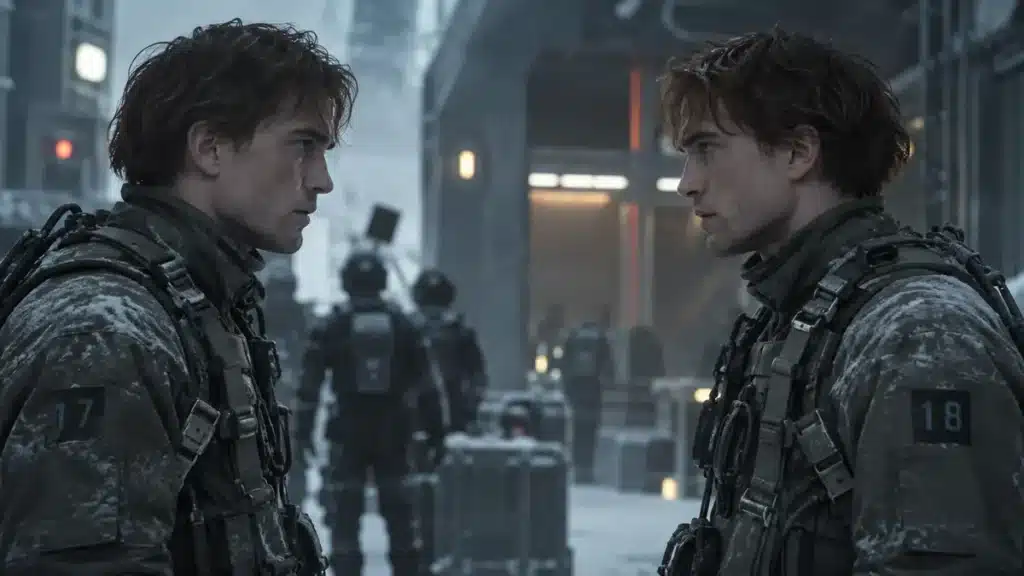
SPOILER WARNING: This article contains major spoilers for Mickey 17.
The Mickey 17 ending brings the film’s central conflict to a violent but surprisingly hopeful close. Mickey 18 sacrifices himself to stop Kenneth Marshall, Mickey 17 survives, the Creepers are spared, and the colony finally moves away from the system that treated human lives as disposable. The final scenes also make the movie’s larger point clear: a person is more than a stored memory, a number, or a replaceable body.
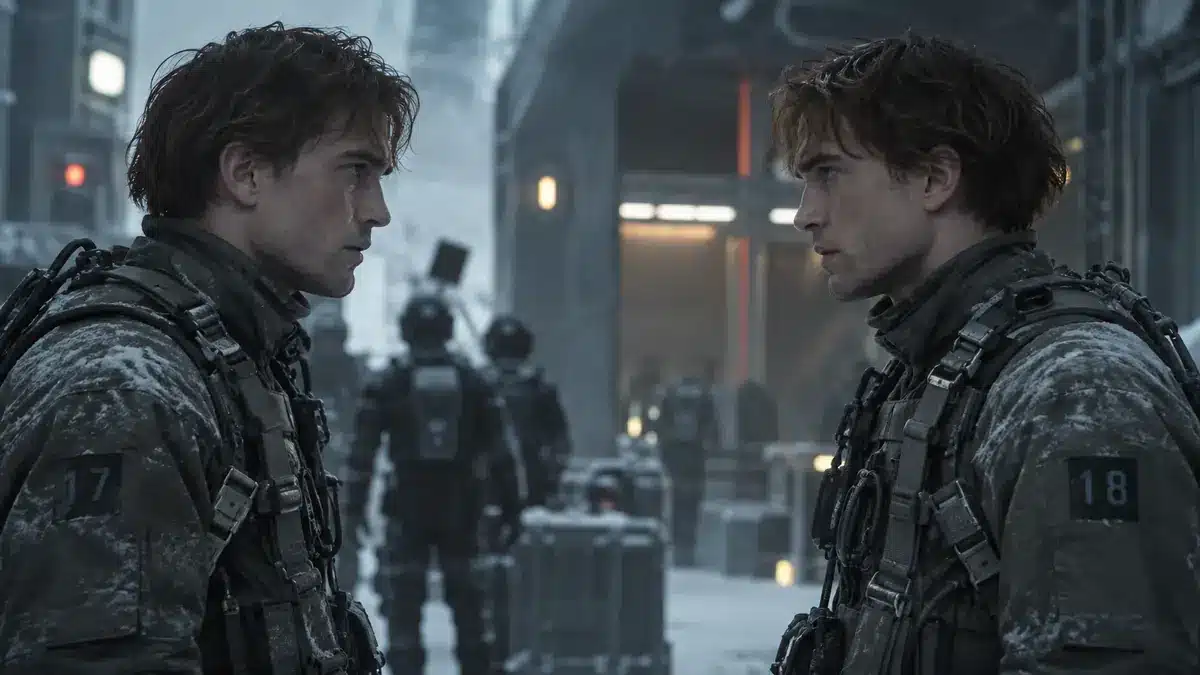
Mickey 17 Ending Explained — What Happens at the End?
By the climax, Kenneth Marshall has decided that the Creepers are not a species to understand but a population to eliminate. He sends Mickey 17 and Mickey 18 outside with explosive devices attached to them and pushes the situation toward a mass killing. The two Mickeys, however, have already learned that the creatures are intelligent and capable of communication.
Mickey 17 uses a translation device to communicate with the Creepers and learns what they want: the surviving baby Creeper must be returned, and one human life must be given in exchange for the Creeper that was killed. Nasha helps recover the baby and returns it to its mother, preventing the standoff from becoming a massacre.
Marshall still refuses to back down. Mickey 18 then turns the confrontation into a final act of resistance. He attacks Marshall, takes control of the detonator situation and deliberately triggers the blast that kills them both. Mickey 17 survives, the Creepers withdraw, and Marshall’s rule ends.
Why Are Mickey 17 and Mickey 18 Both Alive?
The duplicate problem exists because the colony believes Mickey 17 has died after he disappears on Niflheim. Under the rules of the Expendable program, a replacement is printed from his stored memories. That replacement becomes Mickey 18.
The problem is that Mickey 17 is not dead. The Creepers help him survive and return to the colony, meaning two versions of Mickey Barnes are alive at the same time. Under Marshall’s system, that makes both men a liability.
Although the two Mickeys share much of the same memory history, they are not interchangeable. Mickey 17 is more cautious and submissive after years of being treated as disposable. Mickey 18 is angrier, more impulsive and much more willing to fight back. Their different personalities are one of the movie’s clearest arguments that memory alone does not define identity.
What Happens to Mickey 18?
Mickey 18 dies in the final confrontation. He chooses to detonate the explosive while he is with Marshall, killing both of them. It is a conscious sacrifice rather than an accident.
That choice completes Mickey 18’s character arc. He begins as the version of Mickey most willing to use violence and most determined to survive at the other Mickey’s expense. By the end, he uses that aggression against the system that created the conflict in the first place. His death allows Mickey 17, Nasha and the Creepers to survive.
Does Mickey 17 Survive?
Yes, Mickey 17 survives the ending. After Mickey 18 and Marshall die, he remains the only surviving Mickey. More importantly, the final scenes stop treating him as merely another numbered body.
Six months later, the political order of the colony has changed. The printing system is being dismantled, the colony has begun communicating with the Creepers, and Mickey is able to live as Mickey Barnes rather than simply as “Mickey 17.” The destruction of the printer becomes a symbolic rejection of the institution that repeatedly reduced him to a replaceable resource.
If you want the current viewing options after finishing the movie, see our Mickey 17 Where to Watch guide.
What Happens to Kenneth Marshall?
Kenneth Marshall dies when Mickey 18 detonates the explosive during their final confrontation. His death ends the immediate threat to the Creepers and also removes the political figure most committed to the colony’s authoritarian hierarchy.
Marshall’s downfall is important because he represents the same logic behind the Expendable program. He treats Mickey as useful only while Mickey can be replaced, and he treats the Creepers as obstacles because they interfere with his vision of conquest. In both cases, life is valuable only when it serves his ambitions.
The ending briefly toys with the fear that Marshall could somehow return when Mickey imagines Ylfa using the printer again. That moment is a nightmare rather than a literal resurrection. Marshall remains dead, but the dream suggests that systems of abuse can return even after one leader is gone.
What Happens to the Creepers?
The Creepers survive. The final conflict ends after the baby is returned and Mickey 18’s death satisfies the exchange demanded by the Creeper leader. Instead of exterminating the species, the humans are forced to recognize that the creatures have language, social bonds and the ability to negotiate.
Later, the colony develops better communication with them. That shift turns the Creepers from “monsters” in the colonists’ imagination into neighbors with whom coexistence is possible. It also undercuts Marshall’s entire worldview: the people who considered themselves the civilized side were the ones preparing genocide.
Why Does Mickey 18 Make His Final Decision?
Mickey 18’s sacrifice works because it is one of the first choices either Mickey makes outside the logic of survival imposed on them. The Expendable system assumes that death is cheap because another body can simply be printed. Mickey 18’s final act proves the opposite: his life matters precisely because the choice is his.
The film does not spell out every part of his motivation, so it is better not to reduce the moment to one simple explanation. What is clear is that he knows the explosion will kill him and still chooses it to stop Marshall and protect the others.
What Does the Mickey 17 Ending Mean?
The ending is ultimately about identity, human value and the danger of treating people as replaceable. Mickey 17 and Mickey 18 share memories, but their personalities diverge almost immediately. That difference shows that identity is not just data that can be copied into a new body.
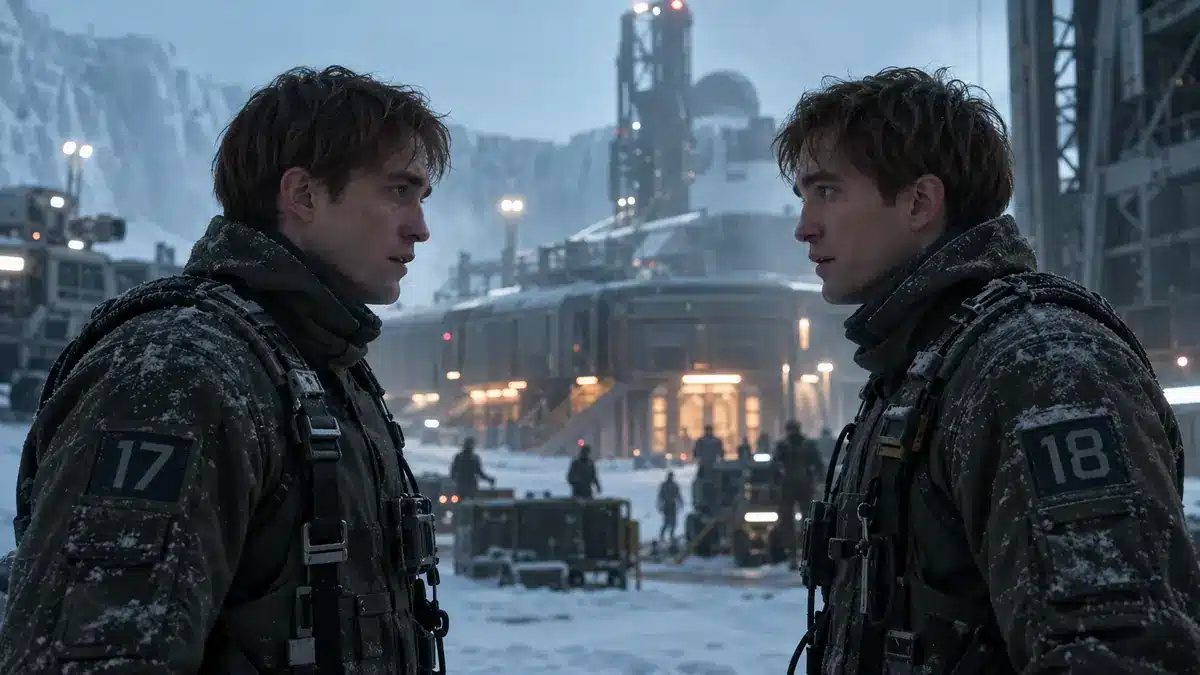
The film also attacks systems that turn workers into numbers. Mickey’s repeated deaths are played for dark comedy, but the joke has an ugly foundation: everyone around him becomes comfortable with his suffering because they believe he can be replaced. The ending rejects that logic by restoring his name and destroying the machine that made his disposability possible.
The Creepers extend the same theme beyond Mickey. Marshall calls them threats before he understands them and prepares to destroy them because they stand in the way of colonization. Once communication becomes possible, the supposed “alien problem” is revealed to be a political and moral failure created by the humans.
For official film materials, Warner Bros. maintains an official Mickey 17 campaign page. For another detailed discussion of the ending and its anti-authoritarian themes, ELLE’s ending analysis is a useful secondary source.
Why Is the Ending Important for Mickey?
At the beginning of the film, Mickey has accepted a job built around the assumption that his death does not matter. He has learned to endure pain rather than challenge the people causing it. By the end, survival means more than staying alive. It means rejecting the identity the system assigned to him.
That is why the name Mickey Barnes matters. The number “17” describes a production sequence. His name describes a person. When he destroys the printer, the movie turns that distinction into a physical act.
Is the Mickey 17 Ending Different From the Mickey7 Book?
Yes. Bong Joon Ho’s film significantly changes the source material. Edward Ashton’s novel centers on Mickey7 and Mickey8 rather than Mickey 17 and Mickey 18, and the movie builds a much larger final confrontation around Marshall, the Creepers and the destruction of the human-printing system.
The basic premise remains recognizable: an Expendable presumed dead returns to discover that a replacement has already been created. But the movie uses that setup for a more openly political ending. Readers who want to compare the original premise can find the official description on Macmillan’s Mickey7 page.
Final Explanation
The simplest way to understand the ending is this: Mickey 18 sacrifices himself and kills Marshall, Mickey 17 survives, the Creepers are spared, and the colony begins replacing authoritarian rule with a system built around negotiation rather than conquest. Mickey then destroys the printer that made the Expendable system possible.
That makes the Mickey 17 ending more than a resolution to the duplicate problem. It is the point where Mickey finally stops being treated as a disposable copy and becomes a person again.
Frequently Asked Questions
Does Mickey 17 die?
No. Mickey 17 survives the final confrontation and is still alive after the six-month time jump.
What happens to Mickey 18?
Mickey 18 deliberately detonates the explosive while fighting Kenneth Marshall, killing both himself and Marshall.
Why are there two Mickeys?
The colony believes Mickey 17 has died and prints Mickey 18 as his replacement. Mickey 17 then returns alive after being helped by the Creepers.
What happens to Kenneth Marshall?
Marshall dies in the explosion triggered by Mickey 18 during the final confrontation.
Do the Creepers survive?
Yes. Their baby is returned, the final standoff ends without extermination, and the colony later develops better communication with them.
What does the Mickey 17 ending mean?
It argues that people cannot be reduced to replaceable bodies or copied memories. The final destruction of the printer symbolizes Mickey rejecting the system that treated his life as disposable.
Is the ending different from the Mickey7 book?
Yes. The novel uses Mickey7 and Mickey8 and resolves its central conflict differently, while the film adds the larger showdown involving Marshall, Mickey 18 and the Creepers.
For another spoiler-heavy recent movie explainer, you can also read Who Dies in Thunderbolts?. If you prefer a spoiler-free review, see our Fantastic Four: First Steps review.