
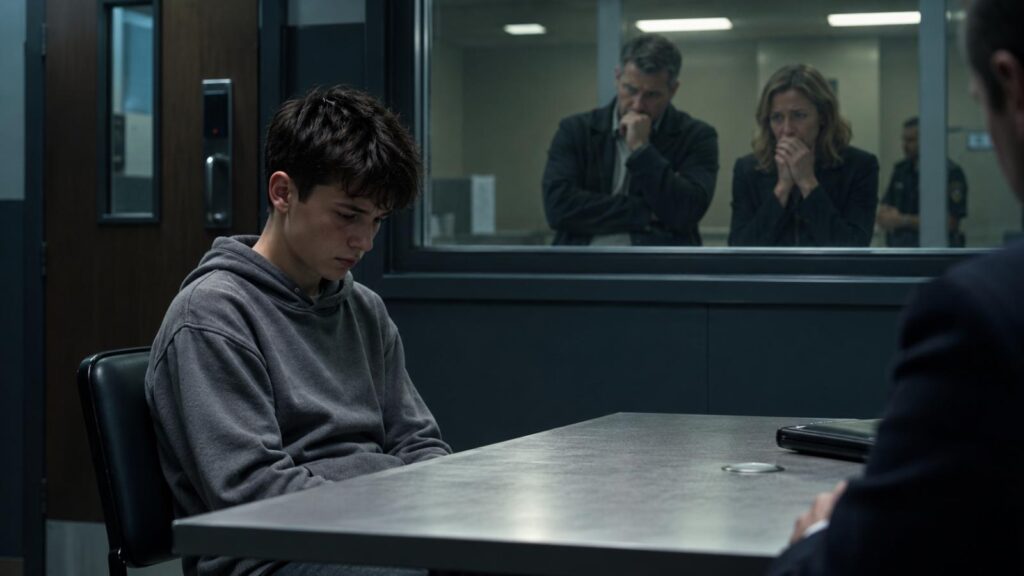
Netflix’s Adolescence is absolutely worth watching for viewers who prefer psychologically demanding drama over conventional crime-thriller thrills. Across just four episodes, the limited series turns a disturbing premise into an intimate examination of a family, a teenager, and the people trying to understand how an ordinary life can be shattered by violence.
What separates Adolescence from a typical Netflix crime drama is not simply its subject. Every episode unfolds as a continuous one-shot, removing the usual comfort of edits and forcing the audience to remain inside conversations long after another series might cut away. That technique can occasionally feel restrictive, but when combined with Owen Cooper and Stephen Graham’s performances, it gives the series an emotional intensity that is difficult to ignore.
CinePulse24 Verdict
Overall verdict: A gripping, emotionally uncomfortable drama that uses its technical ambition to serve its characters rather than distract from them.
Best for: Viewers who enjoy character-driven psychological dramas and serious crime stories.
Main strength: Outstanding performances combined with immersive real-time filmmaking.
Main weakness: The deliberately slow, theatrical approach may frustrate viewers expecting a traditional mystery thriller.
CinePulse24 Rating: 9/10
What Is Adolescence About?
Adolescence is a four-part Netflix limited series centered on Jamie Miller, a 13-year-old boy accused of murdering a classmate. His arrest throws his family into crisis while investigators and other adults attempt to understand what happened and what may have contributed to it.
That is essentially all prospective viewers need to know before watching.
Netflix’s official Adolescence page describes the series around that central accusation, while the official Tudum hub provides additional production and cast information.
The series was created by Jack Thorne and Stephen Graham and stars Owen Cooper alongside Graham, Ashley Walters, Erin Doherty, Christine Tremarco and an extended ensemble.
How many episodes does Adolescence have?
Adolescence has four episodes. Netflix presents the show as a limited series, and each installment is filmed as one continuous shot. The compact structure allows the story to focus intensely on a handful of characters rather than expanding into a long procedural investigation.
Is Adolescence a limited series?
Yes. Adolescence is officially classified by Netflix as a limited series. Its story is presented across four episodes rather than a traditional multi-season crime-drama format, giving the series a concentrated and intentionally self-contained structure.
Adolescence Review: Does the Netflix Series Live Up to the Hype?
The strongest element of Adolescence is its refusal to behave like the mystery thriller viewers might initially expect.
The central accusation creates obvious suspense, but the series is less interested in turning every scene into another clue than in examining the emotional and social consequences surrounding the case. That distinction is important. Anyone arriving solely for twists, revelations and procedural detective work may find the rhythm unusual.
Instead, the storytelling often stays with uncomfortable conversations.
Characters hesitate, interrupt each other, misunderstand what is being said and struggle to control their emotions. Because the camera rarely offers an escape, small behavioral details become as important as conventional plot developments.
This gives Adolescence Netflix an unusually grounded quality. The tension rarely depends on dramatic music or rapid editing. It comes from waiting for someone to answer a question, noticing a shift in body language or realizing that two people in the same room understand a situation very differently.
The approach also gives the show’s emotional moments room to develop. Rather than constantly pushing toward the next narrative reveal, the series allows fear, anger, confusion and embarrassment to sit inside a scene.
That does not make every sequence equally compelling. Some sections are intentionally prolonged, and the pace occasionally exposes how closely the series resembles theater performed for a moving camera. Viewers accustomed to faster Netflix thrillers may become impatient.
But the restraint is generally worthwhile.
The result is a crime drama that feels less concerned with providing the audience with constant stimulation and more concerned with forcing viewers to observe people under extraordinary psychological pressure.
Is Adolescence good?
Yes. Adolescence is a very good limited series, particularly because its acting, writing and continuous-shot filmmaking reinforce the same emotional purpose. It is less effective as a conventional mystery thriller, but as an intense character drama about fear, family and adolescence, it is remarkably controlled.
For more spoiler-free recommendations and critical coverage, visit our latest Netflix reviews.
The One-Shot Filming Is More Than a Gimmick
The most immediately recognizable feature of the Adolescence one shot series format is simple: every episode plays as one continuous take.
Netflix has also detailed the format in its official background coverage of the series.
That technical achievement would mean very little, however, if the show existed primarily to demonstrate how difficult it was to make.
Fortunately, the technique usually has a dramatic purpose.
Without conventional editing, viewers cannot easily jump ahead emotionally. When a conversation becomes uncomfortable, the camera stays present. When characters move through a building or from one emotional state into another, the audience moves with them.
The result is immersion rather than spectacle.
Camera movement is especially important. The frame has to guide attention without relying on cuts, which means entrances, exits, changes in perspective and movement between characters become part of the storytelling itself. The choreography between actors and camera can feel almost invisible when it works well.
That invisibility is crucial.
A weaker production might constantly remind viewers to admire the filmmaking. Adolescence is at its best when you temporarily stop thinking about the absence of cuts because the performance in front of the camera becomes more important.
There are limitations.
The technique occasionally makes an interaction feel more staged than natural. Real life does not conveniently organize people and information around camera movement, and there are moments when the mechanics of maintaining a continuous take become noticeable.
The one-shot format also denies the series some tools traditional editing could have provided. A cut can create contrast, compress time or emphasize a reaction with precision. Adolescence sacrifices those possibilities in exchange for immediacy.
Most of the time, it is a worthwhile trade.
Owen Cooper and Stephen Graham Lead an Exceptional Cast
The Adolescence cast is essential to making the format work because continuous takes offer performers fewer places to hide.
Owen Cooper carries an extraordinary amount of dramatic responsibility as Jamie.
What makes the performance effective is not simply intensity. Cooper repeatedly shifts between different emotional registers without making those transitions feel designed to impress the audience. Vulnerability can sit beside frustration; uncertainty can suddenly become defensiveness.
Those contradictions make Jamie difficult to reduce to a simple character type.
Stephen Graham provides an important counterweight as Jamie’s father, Eddie. Graham is particularly effective when the character is trying to process emotions faster than he can articulate them. His performance often suggests that the most important thought in a scene is the one Eddie has not yet managed to say.
The father-son dynamic consequently becomes one of the series’ most powerful dramatic foundations without requiring exaggerated dialogue.
Ashley Walters brings a different energy as Detective Inspector Luke Bascombe. His performance avoids turning police work into generic procedural authority. Walters gives the character enough restraint that professional observation and personal reaction can exist at the same time.
Erin Doherty, playing clinical psychologist Briony Ariston, faces perhaps the clearest test of the series’ conversational approach. Her effectiveness comes from how carefully she listens. Rather than treating dialogue as an exchange of dramatic speeches, Doherty allows pauses, reactions and subtle changes in control to become part of the performance.
Together, the actors justify the series’ extended takes because there is almost always something worth watching even when very little physical action is occurring.
Adolescence Is More Disturbing Than a Typical Crime Thriller
The most unsettling aspect of Adolescence is not violence itself. It is the questions surrounding how adults understand—or fail to understand—the lives of teenagers.
Without revealing later developments, the series can reasonably be interpreted as examining the gap between what parents believe they know about their children and the social environments those children actually experience.
That includes family relationships, masculinity, peer pressure and online culture.
These themes should not be mistaken for a single simplified explanation of violence. The drama is more effective when viewed as a collection of difficult questions rather than a straightforward argument that one social influence produces one predictable outcome.
Parental anxiety is particularly important.
The series repeatedly creates discomfort from the idea that responsible adults can be physically close to young people while still being unaware of important parts of their emotional and social lives.
Its portrayal of adolescence is similarly uncomfortable because teenage behavior is not romanticized. Communication can be incomplete, coded or hostile. Status and humiliation can carry enormous emotional weight even when adults struggle to understand why.
The show’s interest in masculinity also emerges through behavior rather than lectures. Anger, vulnerability, embarrassment and expectations surrounding male identity frequently overlap.
These are interpretations of the themes the series raises rather than explanations viewers should accept as definitive.
That ambiguity is one reason Adolescence stays with you after an episode ends.
Where Adolescence Falls Short
The same qualities that make Adolescence distinctive also create its biggest weaknesses.
Pacing will be the main obstacle for some viewers.
Because every episode unfolds continuously, the show cannot easily compress conversations that would normally be shortened through editing. Some scenes intentionally become uncomfortable through duration, but intention does not automatically make every slow passage equally effective.
The one-shot technique can also introduce a theatrical quality.
At certain moments, you become aware that actors must move to particular places while the camera follows them. Once you notice the choreography, the illusion of spontaneous realism briefly weakens.
There is also a potential mismatch between the show’s presentation and audience expectations.
Someone searching for a fast crime mystery may assume the accusation at the center of the premise will lead to a familiar series of clues, suspects and cliffhangers. Adolescence is more interested in psychology and consequences.
That makes it more demanding than binge-friendly thrillers designed around constant revelations.
The discomfort is another factor. This is not escapist crime television. Conversations can be emotionally draining, and watching four episodes back-to-back may actually reduce their impact rather than strengthen it.
These criticisms prevent the technical achievement from becoming untouchable. The one-shot format is impressive, but the series succeeds because of what happens inside those shots—not simply because the filmmakers managed to execute them.
Is Adolescence Worth Watching on Netflix?
Yes, Adolescence is worth watching if you want an intense, performance-driven drama rather than a conventional murder mystery. Its four episodes are emotionally demanding but focused, and the continuous-shot format creates genuine immersion. Viewers looking primarily for fast pacing, action or frequent twists may enjoy it less.
The best audience for the Adolescence Netflix series is anyone comfortable with dramas built around conversation, psychological tension and morally uncomfortable questions.
Fans of Stephen Graham will find another emotionally demanding performance, while Owen Cooper provides the series with a compelling young presence capable of carrying long stretches without editing.
Despite having only four Adolescence episodes, this is not necessarily an effortless single-night binge.
Each installment asks for sustained attention. Watching one or two episodes and allowing them to settle may actually suit the material better than consuming the entire limited series as quickly as possible.
The four-episode length nevertheless works extremely well. There is enough room to move beyond the initial accusation without expanding the story simply to satisfy a traditional eight- or ten-episode streaming format.
Viewers looking for answers about the conclusion should eventually be able to continue with our Adolescence ending explained coverage once that article is available.
Who should watch Adolescence?
Watch it if you appreciate:
- Intense character-driven drama
- Psychological tension rather than action
- Ambitious filmmaking techniques
- Strong ensemble performances
- Stories about family and social pressure
You may want to skip it if you primarily want:
- A fast procedural mystery
- Frequent twists and cliffhangers
- Light entertainment
- Conventional crime-drama pacing
Final Verdict
Adolescence succeeds because its technical ambition is connected to a clear dramatic purpose.
The continuous-shot format makes the audience inhabit tense spaces with the characters, but Owen Cooper, Stephen Graham, Ashley Walters and Erin Doherty ensure the filmmaking never becomes the only reason to watch.
It is deliberately uncomfortable, occasionally slower than necessary and not structured like a conventional Netflix thriller. Those limitations will matter to some viewers.
Yet the restraint is also what gives the series its identity.
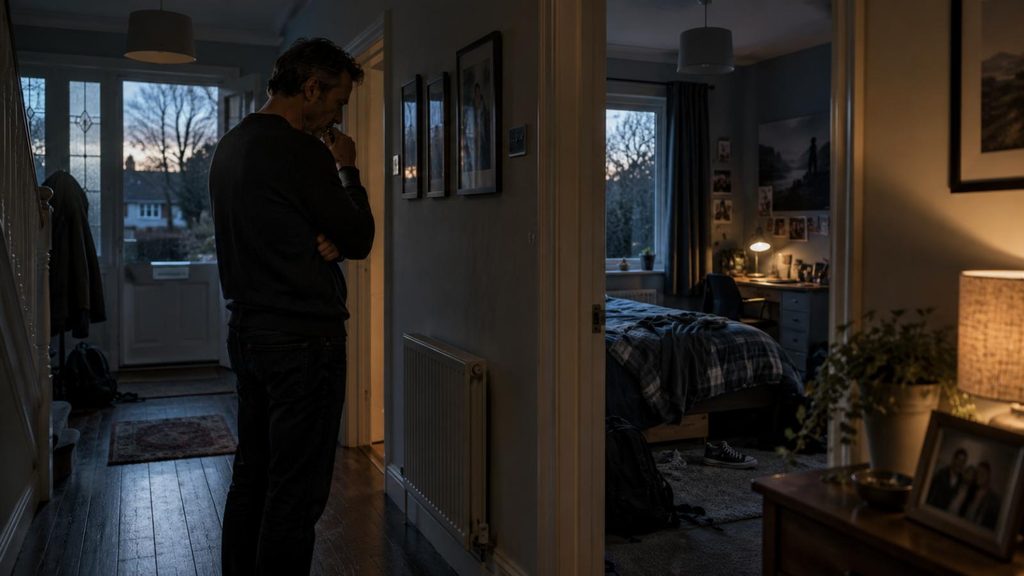
Rather than transforming a disturbing premise into disposable suspense, Adolescence concentrates on people struggling to understand events, each other and the frightening distance that can exist between adults and teenagers.
For viewers willing to give its conversations the same attention they would normally give plot twists, this is one of those rare short series where four episodes feel sufficient.
CinePulse24 Rating: 9/10