Disney’s live-action Moana follows the central journey of the 2016 animated movie, but its final scenes place additional emphasis on Moana’s future as the leader of Motunui.
This Moana ending explained guide breaks down Te Kā’s real identity, Maui’s decision to return, the restoration of Te Fiti’s heart, and what Moana’s final choice means for her people.
Spoiler Warning: This article reveals the complete ending of Disney’s live-action Moana, including the final confrontation and Moana’s return to Motunui.
For a spoiler-free discussion of the cast, music, pacing, and visuals, read our Moana live-action review.
Disney lists the film as a PG-rated live-action adventure with a runtime of one hour and 55 minutes on its official Moana page
1. Why Does Maui Leave Moana?
Moana and Maui eventually reach Te Fiti’s island, but Te Kā blocks their path. Maui uses his magical hook to fight the lava creature while Moana tries to move closer to the island.
Their first attempt ends badly. Maui’s hook is seriously damaged, and he fears that another confrontation will destroy it permanently.
The hook is more than a weapon. It gives Maui his shapeshifting abilities and represents the identity the gods gave him after he was abandoned by his human parents.
Maui therefore refuses to continue and leaves Moana alone. His decision initially appears selfish, but it comes from his fear of losing the object that makes him feel powerful and valuable.
Moana begins to doubt herself and asks the ocean to choose someone else. The spirit of Gramma Tala then reminds her that her courage does not come from Maui, the ocean, or the heart of Te Fiti. It comes from understanding who she has chosen to become.
2. Why Does Maui Return?
After Moana accepts her identity, she retrieves the heart and returns to Te Fiti’s island without Maui.
Maui eventually comes back because he understands that helping Moana is more important than protecting his hook. He confronts Te Kā again and creates enough time for Moana to reach the place where Te Fiti should be.
His return completes his character arc. At the beginning of the story, Maui wants admiration for his powers and past achievements. In the ending, he risks losing those powers to help another person without expecting praise.
Te Kā destroys Maui’s damaged hook during the confrontation. However, the sacrifice demonstrates that Maui has finally become the hero he always claimed to be.
3. Is Te Kā Really Te Fiti?
When Moana reaches the center of the island, she discovers that Te Fiti is missing. She then notices the spiral symbol on Te Kā’s chest and understands the truth.
Te Kā and Te Fiti are the same being.
After Maui stole Te Fiti’s heart, the goddess lost the source of her life and identity. Her pain and anger transformed her into the destructive lava creature known as Te Kā.
This revelation changes the meaning of the final confrontation. Moana does not need to defeat Te Kā. She needs to recognize what happened to her and return what was taken.
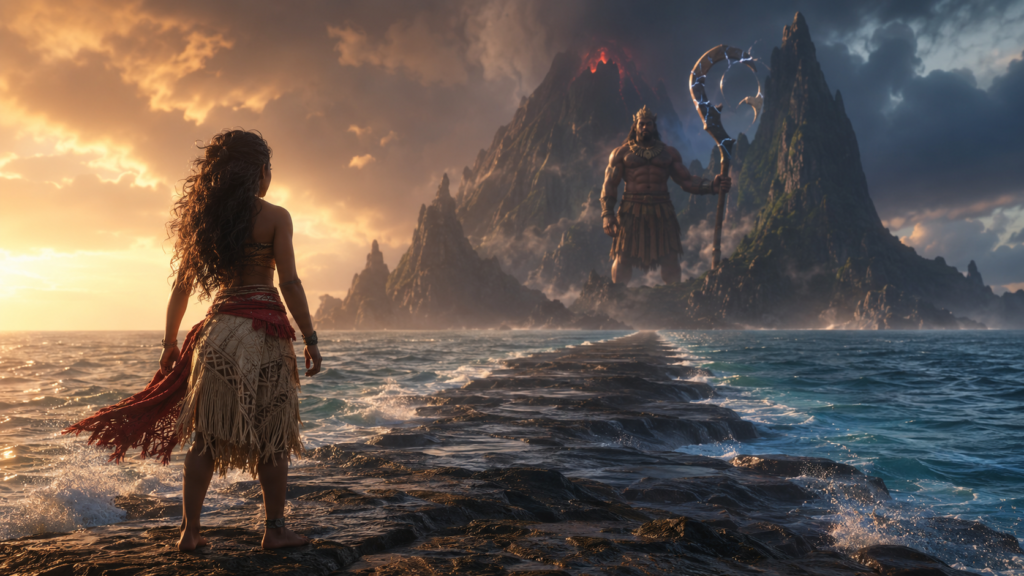
Moana asks the ocean to create a path between them. Instead of attacking, she calmly approaches Te Kā and returns the green stone to its proper place.
Te Kā then transforms back into Te Fiti, restoring the goddess and ending the darkness spreading across the ocean.
4. What Happens to Maui and the Islands?
Once her heart is restored, Te Fiti uses her power to bring life back to the damaged islands. The dying plants recover, the ocean becomes safe again, and the threat facing Motunui ends.
Maui apologizes for stealing the heart. Te Fiti accepts his apology and repairs his magical hook, allowing him to regain his shapeshifting abilities.
This moment matters because Maui receives the hook only after proving that he is willing to live without it. His identity no longer depends completely on his powers.
Te Fiti also repairs Moana’s boat before returning to her natural form as a peaceful island.
Moana and Maui then say goodbye. Their journey ends with mutual respect rather than a romantic relationship. Maui continues travelling across the ocean, while Moana returns to the family and community waiting for her.
5. What Does Moana’s Final Scene Mean?
Moana returns to Motunui and reunites with her parents. The restoration of Te Fiti’s heart has saved the island, but Moana’s journey has also changed how her people understand their future.
She places a shell on the stack of stones representing Motunui’s previous chiefs. The action confirms that she accepts her responsibility as the community’s new leader.
However, Moana will not lead in exactly the same way as the chiefs before her. She combines her responsibility to Motunui with her identity as a wayfinder.
The people recover the boats hidden by their ancestors and begin sailing beyond the reef again. Moana leads them across the ocean, restoring the voyaging tradition that was abandoned after Maui stole the heart.
This gives the remake a complete ending. Moana does not have to choose between her island and the ocean. She brings both parts of her identity together and uses what she learned to guide her community forward.
The film therefore becomes one of the new films 2026 audiences may revisit when looking for stories about identity, leadership, and cultural memory.
Does Moana Have a Post-Credits Scene?
No. The live-action Moana does not contain a mid-credits or post-credits scene.
The story ends after Moana accepts her role as chief and leads her people back onto the ocean. There is no additional scene introducing another villain or directly setting up a sequel.
The credits include music, but viewers do not need to remain in the theater for an extra story sequence. This distinguishes the remake from Moana 2, which used its credits to suggest another conflict.
The absence of a sequel tease allows the live-action movie to work as a complete adaptation of Moana’s first journey.
How Is the Live-Action Ending Different From the Animated Movie?
Most of the ending remains faithful to the 2016 version. Moana recognizes Te Kā as Te Fiti, restores her heart, returns home, and leads Motunui’s people back to sea.
The live-action movie gives slightly more attention to Moana formally accepting her position as chief. This strengthens the connection between her adventure and the responsibility waiting for her at home.
The remake also ends without the brief post-credits joke included in the animated film.
These changes do not create a completely different conclusion. Instead, they make Moana’s development as a leader more explicit.
Moana Ending Explained: Final Meaning
The Moana ending explained comes down to recognition, compassion, and identity.
Moana succeeds because she understands that Te Kā is not simply a monster. She sees the pain beneath the anger and restores the missing part of Te Fiti instead of trying to destroy her.
Maui learns that his value does not come only from his magical hook. Moana learns that she can become both chief and wayfinder. Motunui’s people rediscover the history that fear had forced them to abandon.
For viewers exploring new movies in 2026, the ending offers a clear message: understanding the source of a conflict can be more powerful than defeating the person standing in front of you.
Disney’s official behind-the-scenes feature provides more information about how the filmmakers reimagined Moana’s story and Pacific Island setting.