
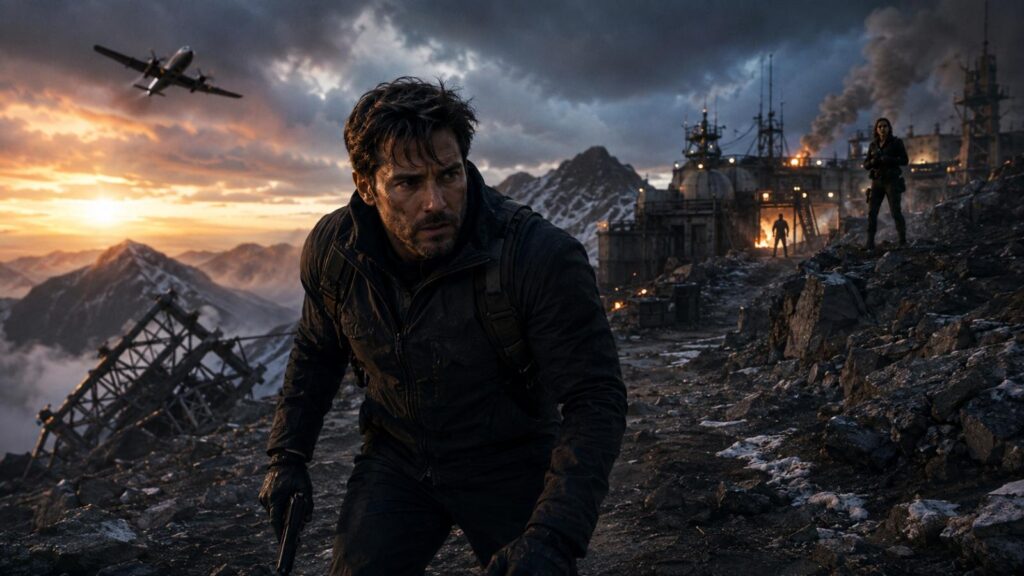
This mission impossible final reckoning review finds an ambitious, technically impressive action epic that delivers spectacular practical set pieces and a committed performance from Tom Cruise, even if its 169-minute runtime and heavy exposition prevent it from matching the franchise at its most efficient.
The film received broadly positive notices, with Rotten Tomatoes’ critical consensus highlighting its enormous action, runtime and scope while framing it as a sentimental Ethan Hunt sendoff.
Mission: Impossible – The Final Reckoning is worth watching for established fans, particularly those invested in Ethan Hunt’s history and the conflict introduced in Dead Reckoning. Casual viewers can still appreciate the physical filmmaking and large-scale suspense, but the dense franchise references may be more demanding without prior knowledge.
Directed by Christopher McQuarrie, the eighth installment was released theatrically in the United States on May 23, 2025. Paramount lists the film as a 169-minute PG-13 action thriller on its official Final Reckoning page.
Mission Impossible Final Reckoning Review: Is It Worth Watching?
Yes—with some qualifications.
The movie’s strongest sequences demonstrate why Mission: Impossible remains one of Hollywood’s defining action franchises. McQuarrie and Cruise continue to favor physical danger, understandable geography and suspense built around bodies, machines and hostile environments.
The result feels more tangible than many effects-heavy blockbusters. Viewers can usually understand where Ethan is, what stands in his way and why a physical task is difficult. That clarity gives the most elaborate sequences a level of tension that computer-generated destruction alone rarely achieves.
However, the movie is not a nonstop action showcase. It devotes considerable time to exposition, past events, institutional debates and explanations of the central threat. Some of that information is necessary, especially for viewers who need a reminder of Dead Reckoning, but the amount of setup makes the opening half feel slower and more solemn than expected.
This is therefore a satisfying continuation with extraordinary individual sequences, not the tightest or most consistently paced entry in the series.
A Spoiler-Free Premise with Global Stakes
The Final Reckoning continues the story of Mission: Impossible – Dead Reckoning. Ethan Hunt and his IMF allies are still confronting the Entity, an artificial intelligence capable of manipulating digital information and destabilizing the systems on which governments depend.
Gabriel, played by Esai Morales, remains the human adversary connected to that threat. Ethan must rely on Grace, Luther Stickell, Benji Dunn and other allies while powerful officials debate how the Entity should be contained or controlled.
The premise expands a familiar Mission: Impossible idea: Ethan is most dangerous when institutions try to reduce human lives to acceptable losses. His missions are never only about completing an objective. They are about finding an option that official calculations have dismissed as impossible.
The film avoids becoming a simple recap of the previous installment, but the two stories are closely connected. Watching Dead Reckoning first will make the relationships, technology and urgency easier to follow.
Tom Cruise Remains Completely Committed as Ethan Hunt
Tom Cruise’s performance remains the film’s center of gravity. Ethan Hunt has never been defined by lengthy speeches or psychological explanations. Cruise communicates the character through focus, movement and the visible pressure of having to make decisions before time runs out.
In Mission Impossible 8, that intensity carries greater emotional weight. Ethan is no longer presented merely as an exceptional agent moving from one assignment to another. The film treats him as a man shaped by decades of impossible choices and by the people affected by them.
Cruise balances that accumulated history with the physical commitment audiences expect. His running, climbing, diving and aerial work are not separate attractions added around the performance. They are part of how Ethan expresses determination.
The movie occasionally presents him with almost mythic reverence, and that approach will not work equally well for everyone. Some passages feel more interested in celebrating Ethan’s legacy than examining it. Still, Cruise’s seriousness keeps the character from becoming detached from the danger surrounding him.
The Supporting Cast Gives the Mission Its Human Stakes
Hayley Atwell returns as Grace and continues to bring a different energy to the team. She is capable and adaptable, but she does not approach danger with Ethan’s experience or near-instinctive confidence. That distinction allows her to question situations that veteran team members may accept immediately.
Atwell is particularly effective when Grace must balance fear, improvisation and responsibility. Her character also gives Ethan someone whose development is still unfolding rather than another established operative who already understands every IMF rule.
Ving Rhames brings history and quiet authority to Luther Stickell, while Simon Pegg’s Benji Dunn provides technical expertise, urgency and carefully measured humor. Their long relationship with Ethan gives the film emotional credibility even when the global threat becomes abstract.
Esai Morales plays Gabriel with restraint rather than constant aggression. He functions best as a patient opposing force—someone who believes he understands Ethan’s values and can use those values against him.
Pom Klementieff, Henry Czerny, Angela Bassett, Shea Whigham and Greg Tarzan Davis help connect the immediate crisis to different parts of the franchise. New additions include Nick Offerman, Hannah Waddingham, Tramell Tillman, Holt McCallany, Janet McTeer, Katy O’Brian and others.
The ensemble is extensive, and not every character receives equal depth. For a clearer breakdown of the returning figures and newcomers, explore CinePulse24’s complete Mission Impossible 8 cast and character guide.
Practical Action Remains the Main Attraction
The action sequences are the clearest reason to watch Mission: Impossible – The Final Reckoning. Rather than relying on constant spectacle, the strongest set pieces establish a physical problem, clarify its dangers and then complicate it step by step.
One major sequence places Ethan in an extreme underwater environment. Another builds suspense around aircraft and the limitations of what a human body can endure at altitude. Neither needs detailed description to explain why the film benefits from a large screen and powerful sound system.
McQuarrie discussed the demanding underwater construction in a National Board of Review interview, describing a massive rotating structure designed to create the sequence’s practical movement and instability. The engineering is impressive, but its real value is cinematic: the environment feels unpredictable because the performer is responding to physical forces rather than an entirely simulated space.
The aerial material follows the same principle. Cruise’s willingness to place himself in demanding environments remains a major element of the series’ identity. His work on the production also earned a Guinness World Records title after he completed 16 burning-parachute jumps while filming, according to the organization’s official account of the stunt.
Knowing how the sequences were created is not required to enjoy them. It simply explains why the danger has unusual weight and immediacy.
Christopher McQuarrie Prioritizes Suspense Over Noise
This is McQuarrie’s fourth Mission: Impossible film as director, following Rogue Nation, Fallout and Dead Reckoning. His command of action remains evident in the way he builds a sequence around limitations.
Equipment fails. Time disappears. An environment changes. A simple movement becomes harder than expected. McQuarrie understands that action becomes suspenseful when the audience can recognize the problem but cannot immediately see its solution.
He also emphasizes the team. Ethan may perform the franchise’s most extreme physical feats, but information, timing and trust remain collective responsibilities. The supporting characters are not present only to watch him work.
The weakness is that the screenplay, written by McQuarrie and Erik Jendresen, often explains its themes and threats at length. The Entity is intentionally abstract, yet repeated discussions of its capabilities can make the narrative feel more complicated without making it more emotionally immediate.
The film works best when its ideas are expressed through choices under pressure. It is less effective when characters pause to underline the importance of those choices.
The 169-Minute Runtime Tests the Pacing
At 169 minutes, The Final Reckoning is the longest movie in the franchise. The scale provides room for multiple characters, global locations and elaborate action, but it also creates pacing problems.
The first half carries the greatest burden. It must reconnect the story to Dead Reckoning, explain the Entity, reintroduce several relationships and establish the authorities responding to the crisis. The amount of exposition produces stretches that feel slower than their urgency suggests.
Once the film commits to its largest physical set pieces, the pacing becomes more confident. Those sequences are long, but their internal structure keeps evolving. Each new obstacle changes the situation rather than merely extending it.
The difference is important: the movie rarely feels too long during its action, but it can feel overextended while arranging that action.
A tighter version might have sacrificed some franchise context or supporting-character material. McQuarrie has acknowledged that the number of characters and emotional arcs contributed to the film’s length. The choice is understandable, yet viewers who prefer the precision of Fallout may find this entry more uneven.
Cinematography Creates Danger, Scale and Isolation
Cinematographer Fraser Taggart gives the film a broad visual range. High-security interiors emphasize control and surveillance, while remote landscapes make Ethan appear physically small against the environments he must cross.
The international settings are not simply decorative postcards. Mountains, open skies, underwater spaces and military facilities each create different forms of pressure. The environments frequently determine how an action sequence can unfold.
The visual approach is strongest when it preserves geography. Wide compositions establish distance and danger before closer shots emphasize physical effort. That balance helps viewers follow complex movement without reducing every confrontation to rapid, disconnected fragments.
The blue, gray and metallic palette supports the technological threat, while warmer natural light provides contrast in the more physical outdoor material.
Editing, Sound and Music Support the Physical Spectacle
Eddie Hamilton’s editing is most effective during the action sequences. Cross-cutting connects Ethan’s physical challenge with the team’s technical and strategic responsibilities, maintaining momentum without making the sequence difficult to follow.
The broader narrative editing is less seamless. Recaps, historical references and repeated explanations occasionally interrupt the forward drive. Some callbacks deepen the idea that Ethan’s present has been shaped by previous choices; others feel designed mainly to remind viewers of the franchise’s longevity.
Sound is essential to the film’s practical atmosphere. Engines, rushing air, stressed metal, water and labored breathing create a strong sense of physical exposure. Moments of relative quiet are used effectively before machinery or movement reasserts the scale of the danger.
Composers Max Aruj and Alfie Godfrey build on Lalo Schifrin’s famous Mission: Impossible musical identity while giving the film a more solemn, end-of-an-era tone. The score supports suspense without needing to dominate every scene, although the movie’s emotional emphasis occasionally becomes heavy.
Connections to Earlier Mission: Impossible Movies
The Final Reckoning looks back across the franchise more openly than most previous installments. Characters, decisions and images from earlier missions help frame Ethan’s current situation as part of a much longer personal history.
For longtime fans, those connections create emotional continuity. The movie recognizes that Ethan’s loyalty has remained remarkably consistent even as directors, enemies and intelligence structures have changed around him.
The callbacks are not always subtle. At times, the film pauses to remind the audience why a person or event matters. That can make the story accessible to viewers who have forgotten specific details, but it can also slow the narrative and make the sentiment feel overly deliberate.
New viewers can understand the central mission, especially because the film provides context. Even so, this is not the ideal starting point. Familiarity with Dead Reckoning is strongly recommended, while knowledge of the original 1996 movie and McQuarrie’s previous installments adds further value.
The Film’s Biggest Strengths
The practical action is the obvious highlight. Its best sequences combine genuine physical difficulty with clear storytelling rather than presenting stunts as disconnected demonstrations.
Cruise remains convincing as both an action performer and a character carrying decades of responsibility. Atwell gives Grace a distinct perspective, while Rhames and Pegg preserve the sense that Ethan belongs to a team rather than operating as a solitary superhero.
McQuarrie’s direction keeps the major set pieces readable, escalating them through physical complications instead of visual noise. The cinematography and sound design reinforce that commitment to scale and tactile danger.
The movie also treats the franchise’s history with genuine seriousness. For viewers invested in Ethan and his allies, that emotional continuity will matter.
Where The Final Reckoning Falls Short
The most significant weakness is the pacing. A 169-minute runtime is not automatically excessive, but the film spends too much of that time explaining the threat, summarizing previous events and repeating the importance of Ethan’s choices.
Its tone is also heavier than the franchise at its most playful. Benji and Grace bring moments of humor and personality, but the overall mood is frequently solemn. Viewers hoping for the lighter rhythm of Ghost Protocol may find the experience overly serious.
The Entity presents another challenge. As an invisible digital intelligence, it cannot provide the same physical presence as the series’ strongest human antagonists. Gabriel supplies that presence, but the relationship between the human villain and the technological threat sometimes feels less direct than it should.
Finally, the movie’s reverence for Ethan can become self-conscious. The emotional weight is earned by the franchise’s history, yet repeated reminders of his exceptional nature occasionally limit the possibility of a more challenging character study.
Does It Feel Like a Satisfying Franchise Finale?
The title naturally raises two related searches: is Final Reckoning the last Mission Impossible, and is Mission Impossible 8 the last one?
The film is structured as a culmination and pays substantial attention to the history of Ethan Hunt. However, Paramount has not definitively announced that it is the final movie in the franchise, and neither Cruise nor McQuarrie has provided an unambiguous confirmation that Ethan can never return.
It is therefore more accurate to describe The Final Reckoning as a potential finale or the closing of a major story arc.
Judged on that basis, it is broadly satisfying. The film respects Ethan’s defining principles, gives his established relationships meaningful attention and delivers action on a scale appropriate for a major franchise chapter.
It does not surpass every earlier installment. Fallout remains tighter, while Ghost Protocol offers a lighter and more efficient team dynamic. Nevertheless, The Final Reckoning possesses enough ambition and emotional purpose to function as a credible farewell if this does become Ethan Hunt’s last mission.
For a closer look at the returning characters and newcomers, read CinePulse24’s complete Mission Impossible 8 cast and character guide
Who Will Enjoy Mission Impossible 8?
The film is best suited to established fans who remember Dead Reckoning and enjoy the franchise’s emphasis on practical action, teamwork and impossible physical challenges.
Viewers who appreciate large-format cinematography, detailed stunt construction and suspense built around real environments will find plenty to admire. Cruise fans will also receive the level of commitment associated with his recent action work.
Casual viewers can still enjoy the main set pieces, but they should expect a dense story and a substantial runtime. Anyone unfamiliar with the series should at least watch Dead Reckoning first.
Those who prefer compact spy thrillers, minimal exposition or lighter entertainment may find the first half demanding. The movie asks for patience before delivering its most impressive material.
Final Verdict: Mission Impossible Final Reckoning Review
This mission impossible final reckoning review concludes that the film is a bold, often thrilling and emotionally committed potential finale weakened by excessive exposition and uneven pacing.
Its greatest achievements come from the elements the franchise still handles better than almost any competitor: physical danger, understandable action, international scale and Tom Cruise’s complete commitment to Ethan Hunt. Hayley Atwell, Ving Rhames and Simon Pegg ensure that the human relationships remain important even when the story expands toward global catastrophe.
It may not be the most precise Mission: Impossible movie, but its strongest sequences are remarkable, and its respect for the series’ history gives the spectacle real emotional purpose.
Rating: 8/10
Verdict: Worth watching, especially for established fans and viewers who value practical action filmmaking.