

Netflix’s Avatar: The Last Airbender takes on a difficult challenge: transforming a beloved animated adventure into a live-action fantasy without losing its humor, emotion, or sense of wonder. The result is an ambitious adaptation with impressive world-building, a committed cast, and exciting bending battles, even if its rushed pacing and heavy exposition keep it from matching the animated original at its best.
This spoiler-light review covers Season 1 of Netflix’s live-action series.
What Is Netflix’s Avatar: The Last Airbender About?
The story begins in a world divided into four nations connected to water, earth, fire, and air. Certain people can manipulate, or “bend,” the element associated with their nation. Only the Avatar can master all four elements and maintain balance between the nations and the spirit world.
Aang, a young Air Nomad, awakens after being frozen for a century and discovers that the Fire Nation has spent those years waging war. He is also the last surviving airbender. Although he never asked for the responsibility, Aang must accept his role as the Avatar and begin learning the other elements before the Fire Nation completes its conquest.
He travels with Katara, a determined young waterbender, and her protective brother Sokka. Their journey brings them into conflict with Prince Zuko, the exiled son of Fire Lord Ozai, who believes capturing the Avatar is his only path back to honor.
Netflix’s version keeps the central premise intact while combining, rearranging, and shortening several storylines from the animation. That approach makes the season accessible to first-time viewers, but longtime fans will immediately notice that some characters and locations appear earlier or under different circumstances.
According to Netflix’s official guide to the live-action series, the first season consists of eight episodes and stars Gordon Cormier, Kiawentiio, Ian Ousley, Dallas Liu, Paul Sun-Hyung Lee, and Daniel Dae Kim.
Does the Live-Action Adaptation Respect the Original?
The series clearly wants to honor the animated story. Familiar costumes, locations, creatures, and bending styles have been recreated with considerable attention to detail. Aang’s orange-and-yellow clothing, the Southern Water Tribe, Kyoshi Island, Omashu, and the Fire Nation all feel connected to the visual identity fans already know.
More importantly, the main emotional conflict remains recognizable. Aang is a child carrying an impossible responsibility. Katara is searching for the confidence and training needed to develop her abilities. Sokka wants to protect his family while learning that leadership requires more than acting fearless. Zuko is driven by anger, rejection, and a desperate need for approval.
The adaptation is not a scene-by-scene copy, and that is sometimes a strength. Live action requires a different rhythm, and combining certain events gives the season a clearer sense of urgency. Some expanded Fire Nation material also provides more context for Zuko, Iroh, Ozai, and Azula.
However, the compression comes at a cost. The animated series often used smaller adventures to build friendships and let humor emerge naturally. The Netflix version moves quickly between major plot points, so a few relationships feel as though they have reached an emotional milestone before the audience has spent enough relaxed time with the characters.
Cast Performances: Who Stands Out?
The young cast has the difficult job of playing characters who already have strongly established personalities. Gordon Cormier brings sincerity and vulnerability to Aang. His performance works best when the story allows Aang to behave like a frightened but hopeful child rather than treating him only as a symbol of responsibility.
Kiawentiio gives Katara a calm determination that becomes more convincing as the season develops. The character’s progress can feel quick because of the compressed structure, but the performance communicates her compassion and refusal to remain powerless.
Ian Ousley’s Sokka provides much of the group’s practical energy and humor. This version of the character is less exaggerated than his animated counterpart, yet his loyalty and insecurity remain essential to the group dynamic.
Dallas Liu delivers one of the season’s strongest performances as Prince Zuko. He captures the character’s impatience and aggression without hiding the pain underneath them. Zuko’s scenes with Paul Sun-Hyung Lee’s Uncle Iroh give the series some of its most affecting moments. Their relationship feels lived-in, complicated, and emotionally important.
Daniel Dae Kim brings authority to Fire Lord Ozai, while Elizabeth Yu’s Azula adds a colder and more calculating presence within the Fire Nation storyline. The expanded attention given to this side of the conflict helps the villains feel connected to a larger family struggle instead of functioning only as obstacles in Aang’s path.
Visual Effects, Bending, and World-Building
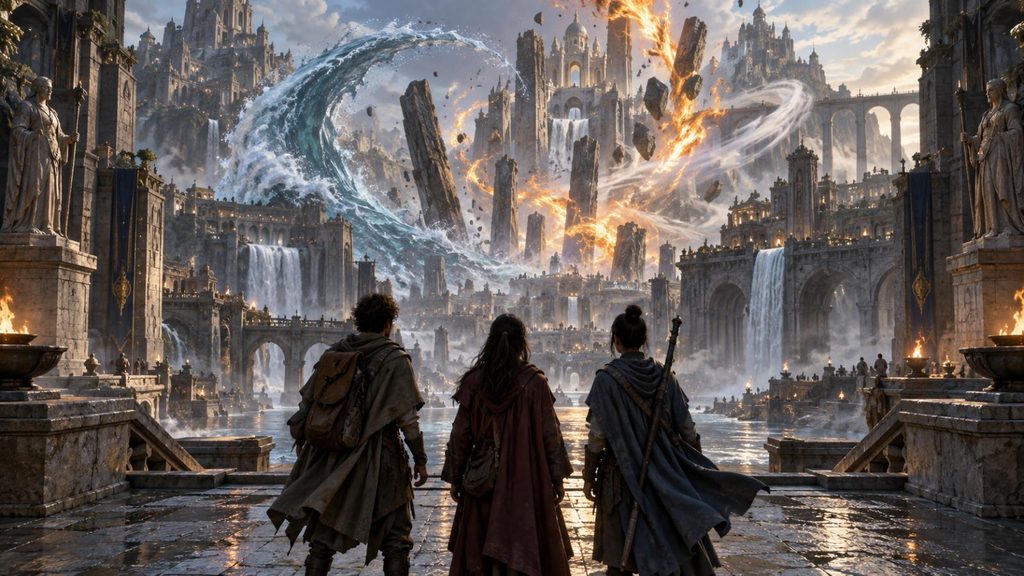
The elemental action is one of the clearest reasons to watch the Avatar: The Last Airbender live action adaptation. Fire has weight and danger, waterbending moves with a graceful rhythm, earthbending feels forceful, and airbending gives Aang’s movement a light, energetic quality.
Not every digital effect is equally convincing, but the major battles communicate the scale of the world and the differences between the bending disciplines. The effects are most effective when they support physical movement and character choices rather than becoming the entire point of a scene.
Production design does much of the heavy lifting. Each nation has a distinct visual identity built through architecture, color, costume, and landscape. The series can occasionally feel confined by digital environments, yet its best locations create a convincing fantasy world with its own history and culture.
Appa, Momo, and the spirit-world creatures also help preserve the stranger, more magical side of the franchise. Their presence prevents the adaptation from becoming a generic war fantasy and reminds viewers that the Avatar’s mission involves spiritual balance as well as political conflict.
Where Does the Netflix Series Fall Short?
Pacing is the most consistent weakness. Eight episodes must introduce an extensive world, several cultures, a large cast, the spirit realm, and a century-long war. The season often responds by placing important information directly into dialogue. Characters sometimes explain their feelings, history, or purpose instead of allowing those details to emerge through action.
That exposition can make conversations sound less natural, especially during the opening episodes. It also reduces the playful space that made the original trio’s friendship so convincing. The live-action series has humor, but it is more serious overall and occasionally forgets that Aang, Katara, and Sokka are young people discovering the world together.
The compressed storytelling also means that some supporting characters appear briefly and then disappear. Fans may appreciate recognizing them, but newcomers do not always receive enough time to understand why every appearance matters.
These problems do not ruin the season. They simply keep a promising adaptation from feeling fully balanced. The world is compelling, the central cast grows into its roles, and the emotional high points land, but the writing would benefit from greater patience and more trust in visual storytelling.
Is Avatar: The Last Airbender Worth Watching?
Yes, with the right expectations. This is not a replacement for the animated series, and viewers looking for an exact recreation may be frustrated by the combined plots and altered character beats. As a separate interpretation, however, it delivers an accessible fantasy adventure with strong production values and a clear respect for its source material.
New viewers are likely to enjoy the straightforward mythology, elemental action, and ongoing pursuit between Aang and Zuko. Existing fans may be more critical of the pacing but can still find value in the cast, world-building, and the adaptation’s attempts to deepen certain Fire Nation relationships.
The show is also easy to recommend to families and fantasy audiences who want a serialized adventure built around friendship, responsibility, and hope rather than cynicism. Its darker moments establish the cost of war, but the story retains the belief that empathy and courage can change people.
How the First Season Sets Up What Comes Next
The first season establishes Aang’s mission but leaves much of his training ahead of him. The wider conflict continues to grow, and the characters’ choices create consequences that extend beyond the initial journey through the Water Tribes.
The next chapter expands the Earth Kingdom storyline and introduces major new challenges. Readers who want the current streaming details can visit our updated guide to the Avatar Season 2 release date and Netflix availability.
The official Netflix page for Avatar: The Last Airbender also lists the available seasons, episodes, cast, and trailers.
Final Verdict
An uneven but worthwhile adaptation: the cast and bending battles give it personality, while rushed pacing and heavy exposition limit the friendships’ emotional impact.
CinePulse24 verdict: 7.5/10.

