Andor Season 2 is the second and final season of Tony Gilroy’s Star Wars political thriller, and it delivers a gripping, emotionally demanding conclusion. This Andor Season 2 review is spoiler-light, but the verdict is simple: the season is absolutely worth watching. Its sharp writing, layered performances, and frighteningly plausible portrait of authoritarian power make it one of the strongest Star Wars stories on screen. The new structure moves faster than Season 1 and steadily closes the distance to Rogue One, though the yearly time jumps sometimes compress character development that deserved more room. Even with that tradeoff, the final season turns rebellion into a difficult human process built on fear, compromise, and sacrifice.
Andor Season 2 Review — Quick Verdict
| Rating | 9.2/10 |
|---|---|
| Best for | Star Wars fans, political-thriller viewers, and anyone who admired Season 1 |
| Strengths | Exceptional writing; powerful performances; escalating political tension |
| Weaknesses | Demanding time jumps; occasional compression; not background viewing |
| Overall | Yes—Andor Season 2 is worth watching for mature, character-driven science fiction. |
Is Andor Season 2 good? More than that: it is focused television that trusts viewers to follow competing motives without reducing every conflict to simple heroes and villains. It rewards attention and patience, then uses both to make its biggest turns land.
What Works So Well in Andor Season 2?
The writing remains the series’ greatest strength. Conversations are rarely simple exchanges of information. A speech may be persuasion, a threat, a cover story, or all three at once. Characters choose their words according to who is listening, which gives even quiet scenes tension. The season understands that political power operates through offices, ceremonies, intelligence reports, social pressure, and manufactured narratives—not only through soldiers and weapons.
That approach makes the Empire unsettling. Its officials compete for status, protect departments, interpret incomplete evidence, and use bureaucracy to turn cruelty into procedure. The threat feels systemic rather than dependent on one villain. When violence arrives, the machinery that made it possible has already been visible.
The Rebellion receives the same moral attention. Resistance groups disagree over tactics, ideology, trust, and acceptable losses. Unity is not automatic simply because everyone opposes the Empire. The season shows how a movement becomes organized while asking what its people must surrender. Cassian’s growth is not just about becoming braver; it is about learning when to trust an imperfect cause.
Performances
Diego Luna gives Cassian a controlled, internal performance. Season 1 followed a man discovering that neutrality could not protect him. Season 2 presents someone more capable but not emotionally invulnerable. Luna plays the distance between Cassian’s private desires and public responsibilities through exhaustion, restraint, and flashes of anger. He never turns commitment into uncomplicated heroism.
Genevieve O’Reilly is outstanding as Mon Mothma. She captures a politician losing the protective distance between principle and consequence. O’Reilly can make a formal smile register as panic, calculation, and defiance at once. Her scenes prove that polite conversation can carry as much danger as a battlefield.
Stellan Skarsgård refuses to play Luthen Rael as a comforting mentor. Luthen is strategic, charismatic, controlling, and haunted by the methods he considers necessary. Elizabeth Dulau’s Kleya reveals the discipline required to keep his operation alive. Denise Gough brings precision to Dedra Meero, while Adria Arjona gives Bix’s trauma real weight. Forest Whitaker’s Saw Gerrera remains theatrical and frightening, yet grounded in recognizable fear.
Story and Pacing
The 12 episodes are arranged as four three-episode arcs, each moving the timeline forward by roughly a year. The release pattern—three episodes per week—matched that design. Each block has its own dramatic problem while contributing to the larger movement toward open rebellion.
This gives Season 2 more momentum than the early stretch of Season 1. It can enter a situation near its breaking point, tighten the pressure, and deliver a consequence within three episodes. The strongest arcs feel like compact political thrillers.
The cost is compression. Important relationships change during the gaps, and viewers must infer what happened from behavior and context. That is often rewarding, but some transitions feel like missing chapters. The opening arc also spends time on a frustrating rebel dispute before the larger engine fully engages.
Still, the pacing is purposeful. This is not a show built around a weekly cameo or action sequence. It accumulates pressure through decisions. Viewers who track names, alliances, and institutional details will find it absorbing; anyone watching casually may find it dense.
Andor Season 2 Feels Bigger Without Losing Its Identity
The scale expands. Rebel networks begin to resemble an alliance, Imperial strategy reaches across planets, and public events carry consequences beyond individual characters. Yet the show rarely confuses size with spectacle. Its biggest moments work because the camera stays attentive to frightened faces, crowded rooms, and the people required to execute grand plans.
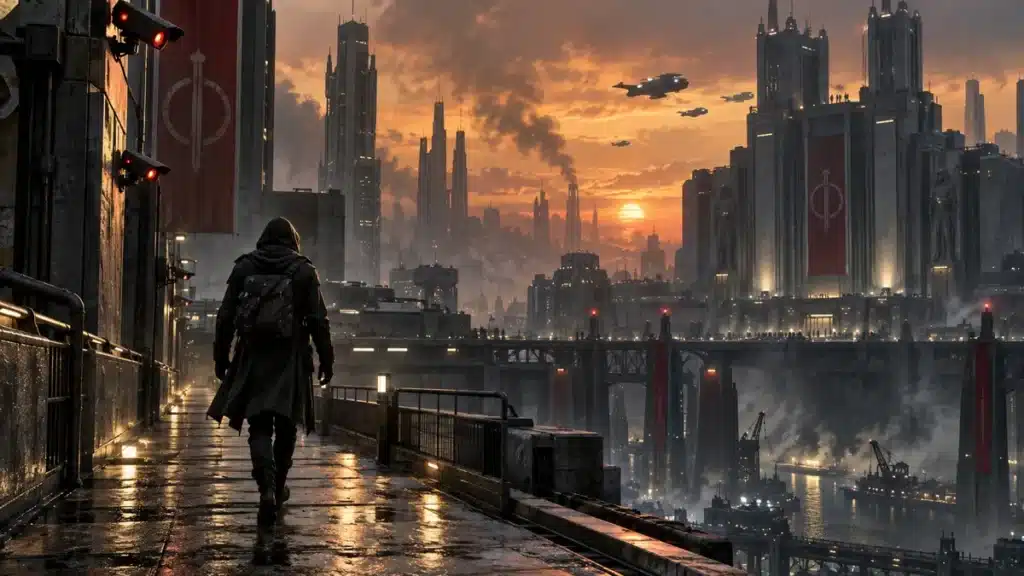
Production design remains tactile. Workspaces look used, costumes communicate class and authority, and technology has physical weight. Industrial corridors, political interiors, and improvised safe houses feel like parts of the same unequal society. The cinematography often frames characters within rigid architecture, reinforcing the sense that institutions are closing around them.
Action is deployed carefully. When the season becomes violent, geography and motivation remain clear. The series is more interested in the conditions that produce an explosion than in celebrating the explosion itself. That restraint preserves Season 1’s grounded identity.
How Season 2 Builds Toward Rogue One
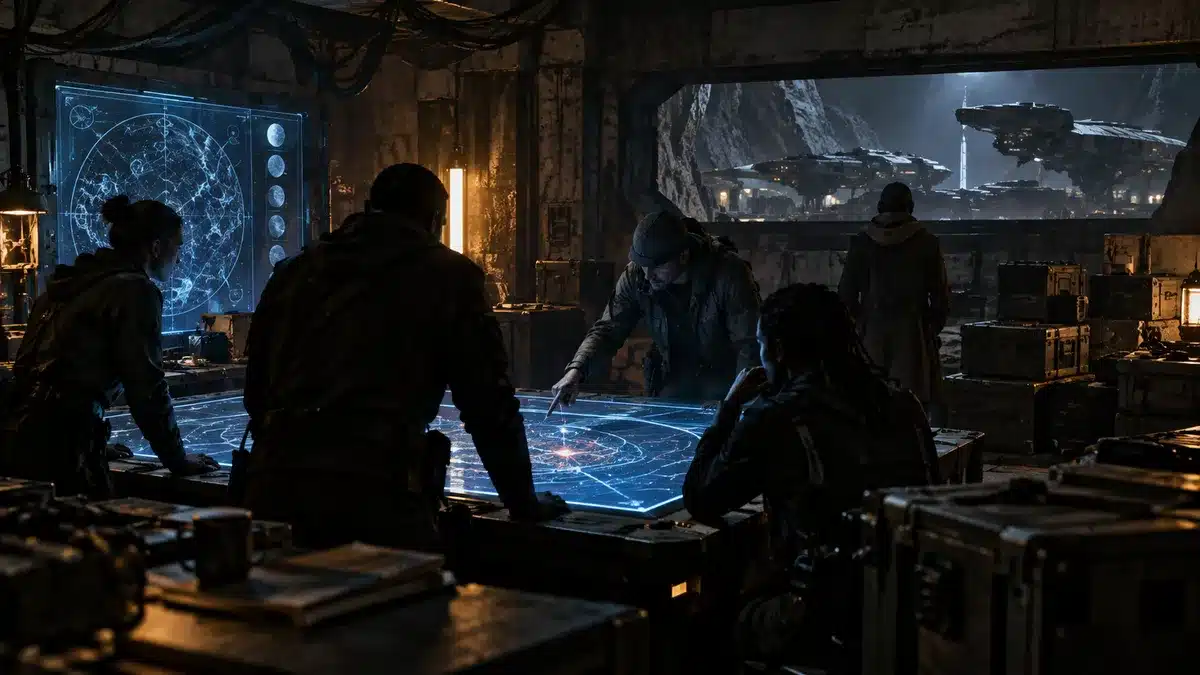
Season 2 covers the remaining years before Rogue One and transforms Cassian into the intelligence officer introduced in the film. The connection is not merely familiar names. The series clarifies why he can make ruthless decisions, why Rebels trust his judgment, and why the cause has become inseparable from his identity.
It also gives meaning to the institutions around him. The Rebel Alliance does not appear fully formed; competing networks, political leaders, militants, and spies struggle toward cooperation. That history makes the urgency of Rogue One feel earned.
This review avoids the finale’s major revelations. Readers who have finished the season can read our full Andor Season 2 ending explained for the final scene, character fates, and precise timeline connection. The spoiler-light point is that the transition works: the last episodes do not simply approach the movie, they deepen its stakes.
What Does Andor Season 2 Do Better Than Season 1?
Season 2 is broader, faster, and more politically ambitious. Its storylines interact more directly, and the sense of historical movement is stronger. Characters who once operated in isolated circles now affect one another. The season also benefits from existing groundwork; a name, place, or relationship can create immediate tension without rebuilding context.
Season 1 remains more patient and intimate. Its Aldhani and prison arcs have room to develop environments and supporting characters with extraordinary precision. Season 2’s time jumps cannot always offer the same depth. Season 1 is the cleaner story of radicalization; Season 2 is the more ambitious portrait of revolution.
The sequel has the stronger cumulative payoff, but it earns that power partly from the first season. Calling either one clearly superior misses how deliberately they function as two halves of the same argument.
What Does Not Work?
The yearly jumps are the most significant weakness. They create urgency and cover four years, but some emotional changes occur off-screen. A viewer may understand why a relationship shifted without fully feeling the steps that produced it.
The number of characters and organizations can also be challenging. The show expects viewers to remember professional roles, covert relationships, and earlier conversations. That confidence is admirable, but it makes the season less accessible after a long gap or without full attention.
A few storylines feel squeezed by the fixed endpoint. Because the narrative must arrive at Rogue One, later episodes occasionally move information and characters into position with greater efficiency than grace. The season never becomes empty franchise setup, but the pressure of the destination is visible.
The sober tone will not suit everyone. Humor exists, but there is little escapist looseness. The drama focuses on surveillance, propaganda, compromise, and political violence. That is its identity, not a flaw, though it explains why casual viewers may struggle.
Is Andor Season 2 Worth Watching?
Yes. Andor Season 2 is worth watching for anyone who values intelligent writing, layered performances, and science fiction that treats politics as more than decoration. Star Wars fans gain a richer understanding of the Rebellion and Cassian, while political-thriller viewers can appreciate it without deep franchise knowledge.
It is less suitable for viewers seeking a light adventure, constant action, or a standalone entry point. Season 1 is essential; Season 2 assumes familiarity with its characters and consequences. It also demands concentration during the time jumps.
For viewers who meet it on those terms, the final season delivers. It expands the scale, preserves the moral complexity, and reaches Rogue One without losing sight of ordinary people inside history. For episode details, cast information, and broader context, read our complete Andor Season 2 guide.
Final Verdict
CinePulse24 Rating: 9.2/10
Andor Season 2 is a powerful conclusion combining political intelligence with emotional consequence. Its compressed timeline occasionally leaves important development between episodes, but the writing, performances, atmosphere, and payoff remain exceptional. It is a rigorous drama about how resistance is built and what it costs.
Critical reception is similarly strong. Rotten Tomatoes currently lists a 97% critics score and 90% audience score, while the official Disney+ series page confirms the complete two-season run and 12 Season 2 episodes.
Frequently Asked Questions
Is Andor Season 2 good?
Yes. Its writing, performances, political tension, and production design make it one of the strongest Star Wars seasons.
Is Andor Season 2 worth watching?
Yes, especially if you liked Season 1 or enjoy mature political thrillers. It is dense and requires attention, but the payoff is substantial.
Is Andor Season 2 the final season?
Yes. Season 2 completes the series and brings Cassian’s story to the beginning of Rogue One.
How many episodes are in Andor Season 2?
There are 12 episodes, structured as four arcs of three episodes.
Does Andor Season 2 lead into Rogue One?
Yes. It covers the final years before the film and ends where Cassian’s next mission connects to Rogue One.
Is Andor Season 2 better than Season 1?
It is bigger and faster, with stronger cumulative payoff, but Season 1 is more patient and intimate. The better season depends on which approach you prefer.